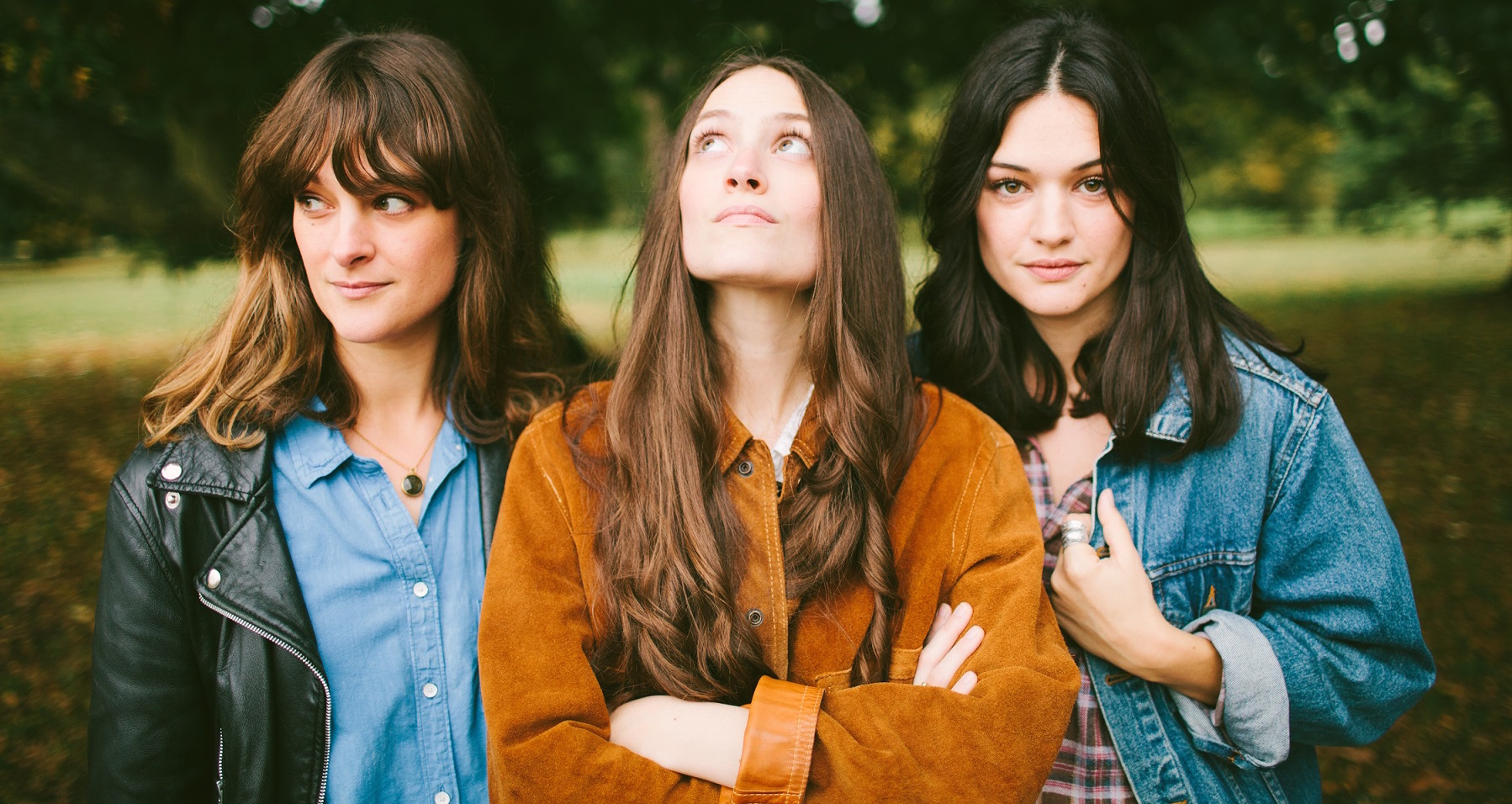
A Blissful Twilight with The Ballroom Thieves

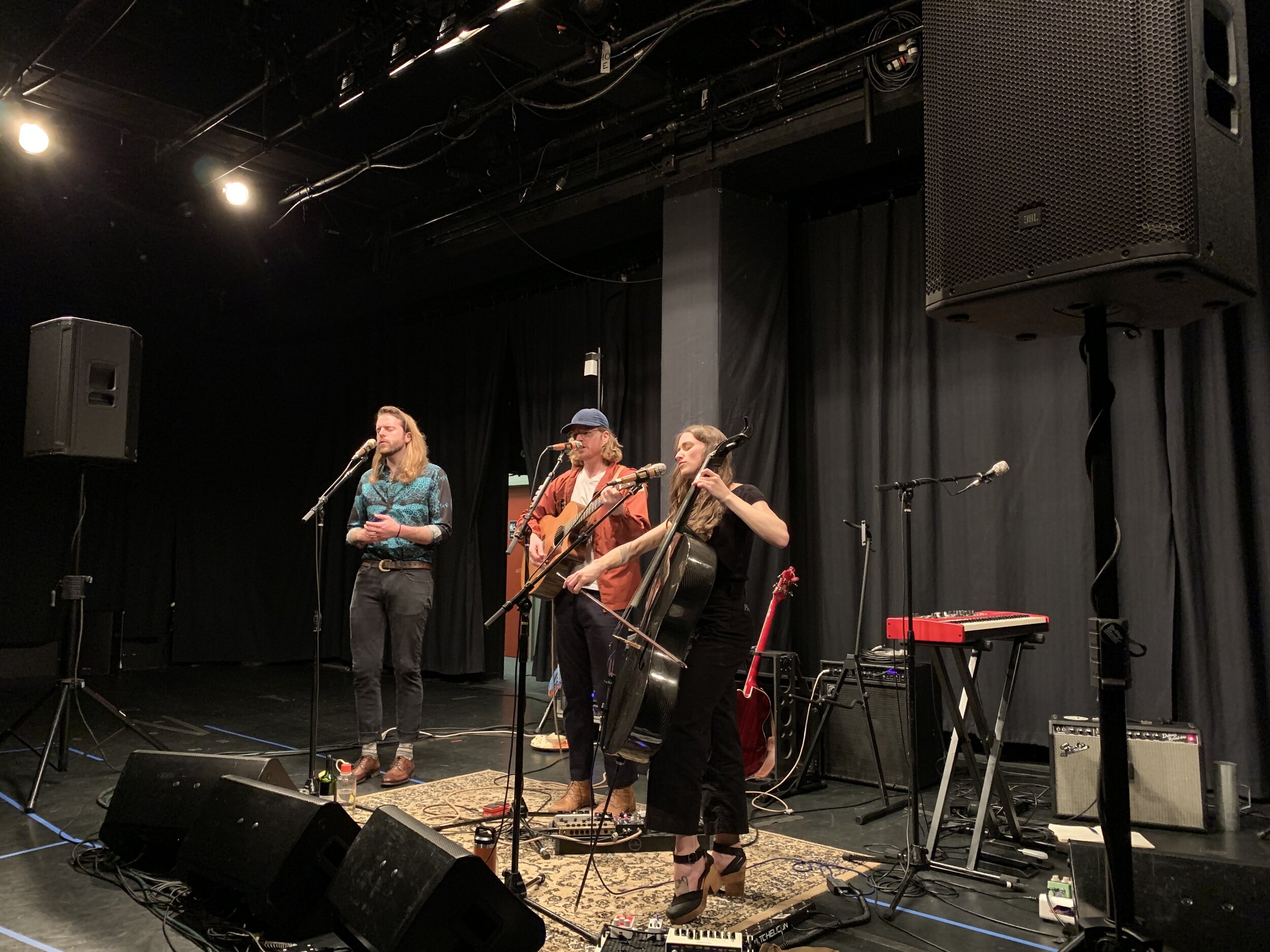
Hailing from New England, The Ballroom Thieves released their third album, “Unlovely” this past Valentine’s Day. Co-written by Callie Peters and Martin Earley, the album covers everything from female empowerment to love in a committed relationship as well as diving into their frustration about the current state of American leadership. Earley explained that their song writing process has changed over the past couple of years. “I used to write all of the songs by myself and bring them to the band,” adding that Peters had recently been bringing her own pieces to the table where they would combine forces. “Now we are changing that up a little bit and challenging ourselves to really co-write songs, so that we’re not just kind of pointing out little things here and there on each other’s songs to try and fix them. But rather we’re sitting down and saying, ‘ok, we’re gonna write this song, what is it gonna be about?’”

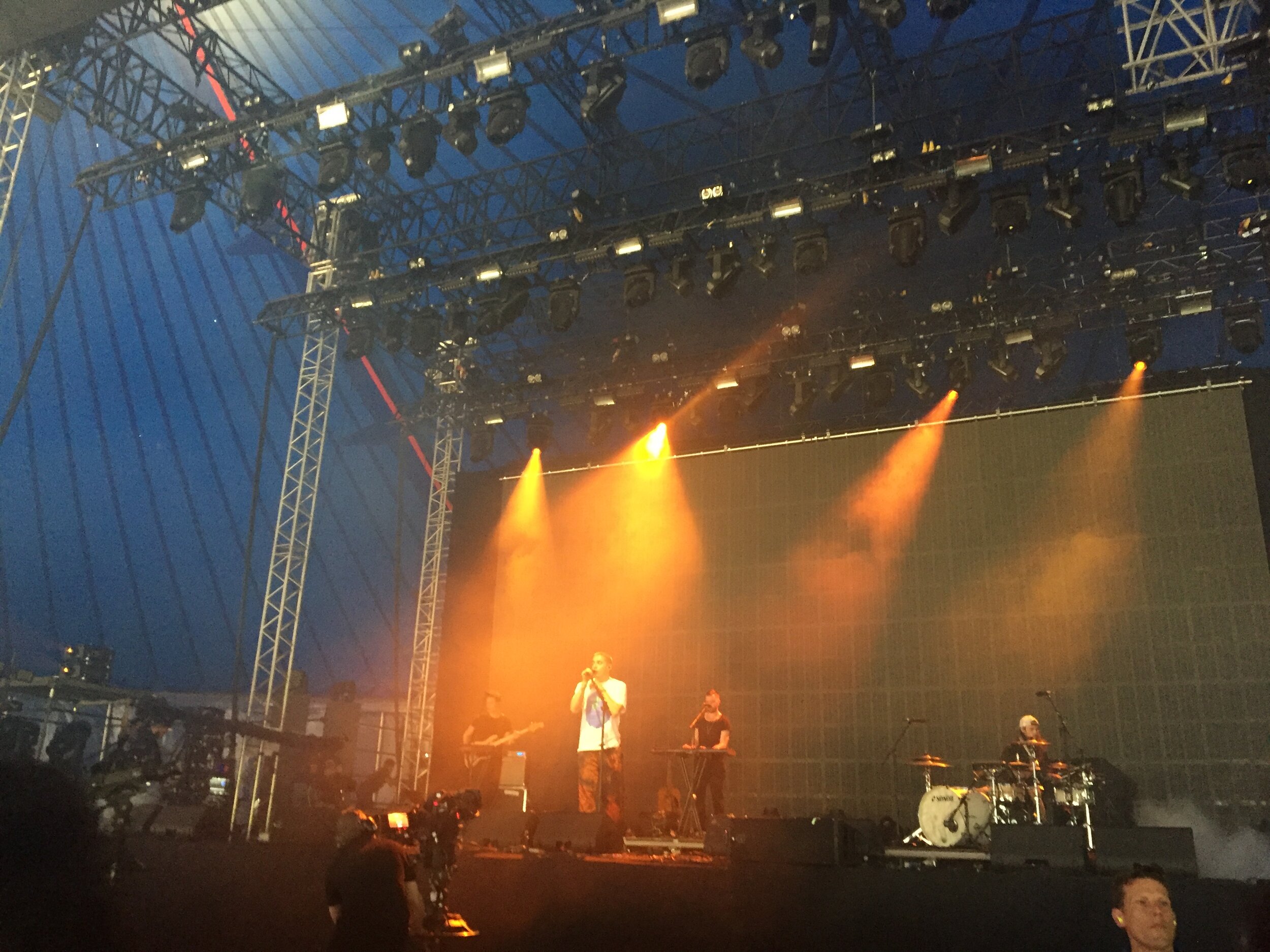
Three musicians playing music on a stage.
The Ballroom Thieves

Recently engaged, Peters and Earley play to their strengths and weaknesses as creative partners. “I’m more of a lyrics guy and she’s way more of a melody woman, so those two things kind of work well together,” Earley shared. “Unlovely” not only echoes the new song writing team, it also offers new sounds like with the track 7, “Vanity Trip”, a tune that sounds like it came out of the 1970’s. Early explained that, “the inspiration [for the song] was more Tom Petty.” The cause of which could be their rapid collection of pedals and gear for their instruments. “In the last couple of years [I] got way more into gear in general, especially guitar gear. I spend way too much money on pedals, and I got really into the boutique stuff,” Earley said. He went on to explain that the decision to go more electric on this album was a conscious one, “but it was kind of a chicken and egg situation because the tones and the new gear inspired some of the songs, but also it was already planned to change things up a bit and go more electric.”

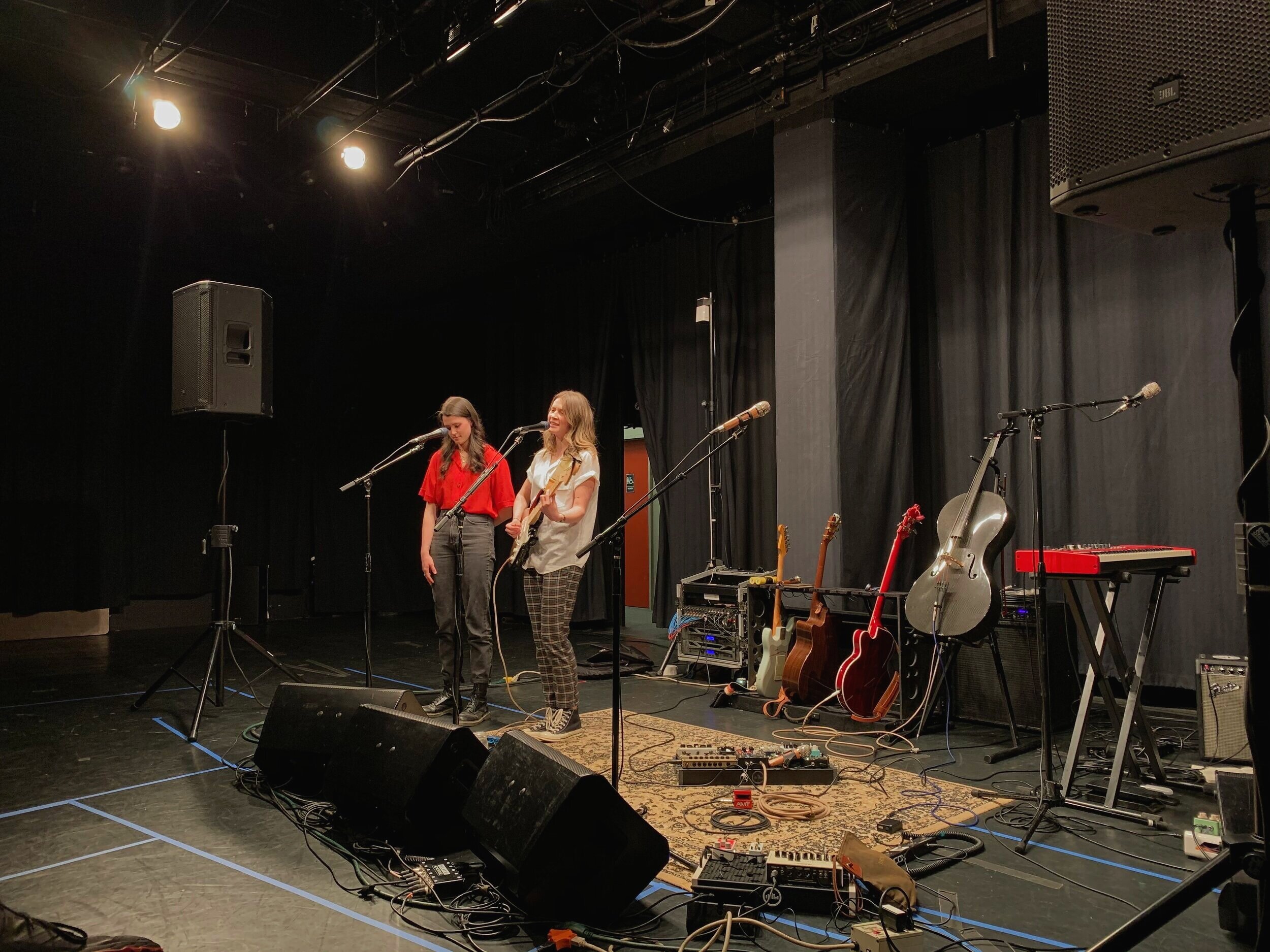
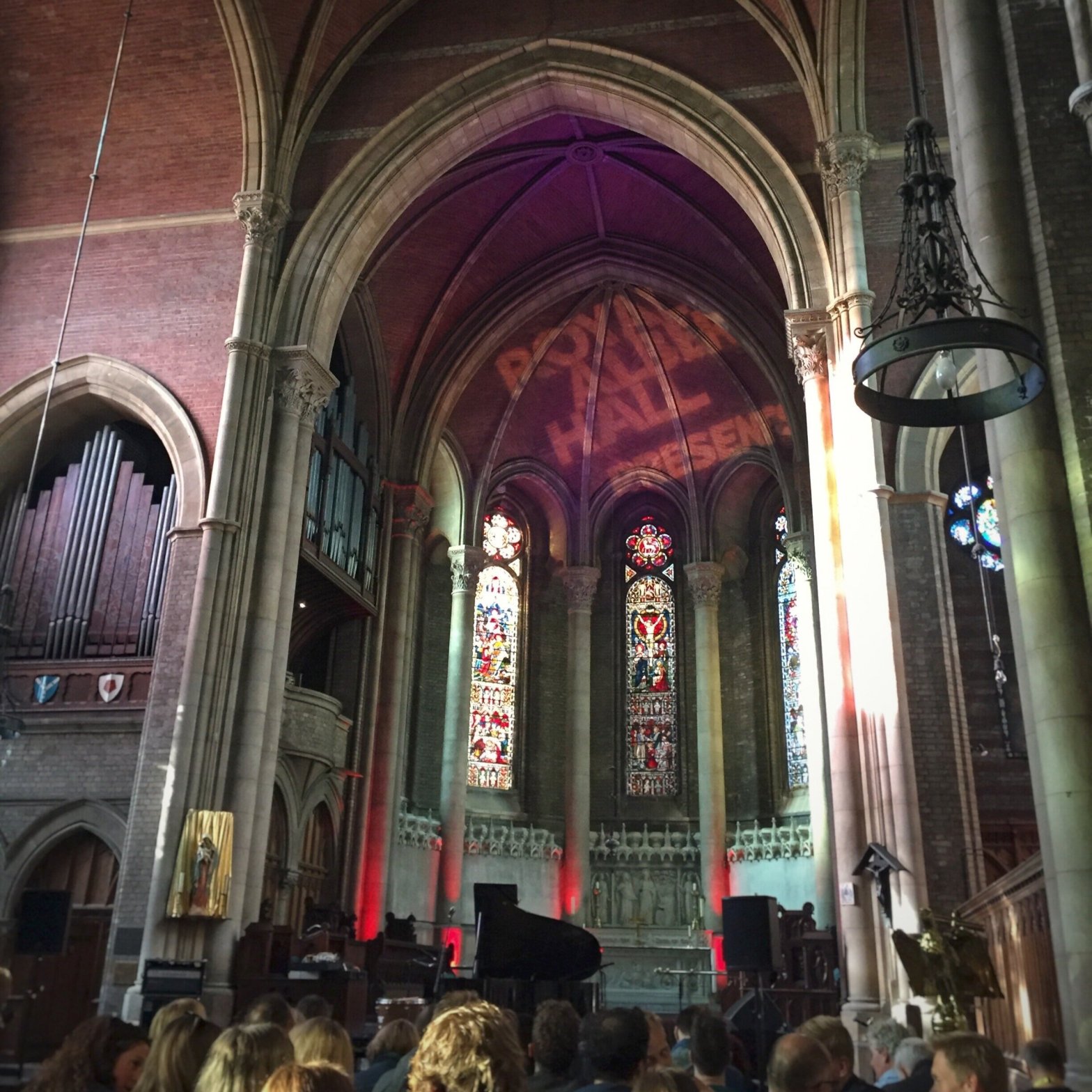
Originally a trio, the group now tour with a fourth member who plays keyboard, guitar and adds backing vocals. The quartet played to a full house last Tuesday at the Black Swan Theatre. Opening for them was Harlequin Gold, a Canadian sister duo with a single electric guitar, who filled the room with haunting harmonies and blissful lyrics. Although they were missing their full band, the two captured the audience who were reluctant to let them leave at the end of their set. The Ballroom Thieves took to the stage around 8:30 and immediately a sense of calm and comradery swept through the room as the group kicked off with their first song. The Thieves brought an entirely new sonic palette to their eclectic audience when they launched into their second song, “Tenebrist”. Backed by a beautiful electric melody, this track off the new “Unlovely” brims with wistful energy that had the audience hooked.

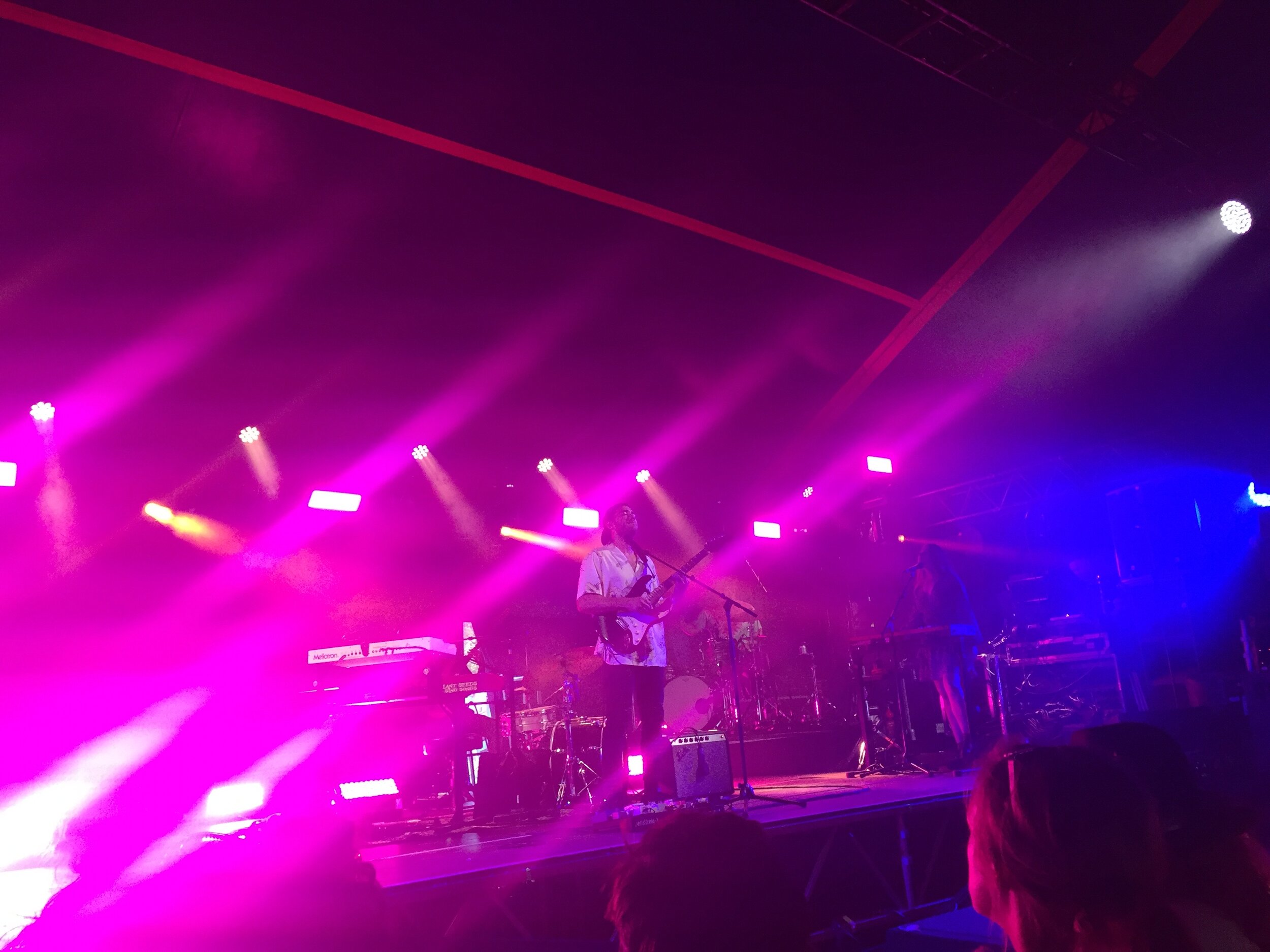
Two women playing music on a stage.
Harlequin Gold

The group brought the audience into the performance with their song “Wolf”. With the audience singing the “wolf call” chorus as they accompanied the band, this tune was easily the most memorable moment of the evening. From witty stage banter courtesy of the Thieves’ drummer, Devin Mauch, to the sweeping cello movements on “Love is Easy”, this live show transcended the folk genre entirely to create something richer and undefinable. A true lived shared experience around music, something that seems so impossible now.

It Takes a Village to Make an Album: An Interview with The Weepies

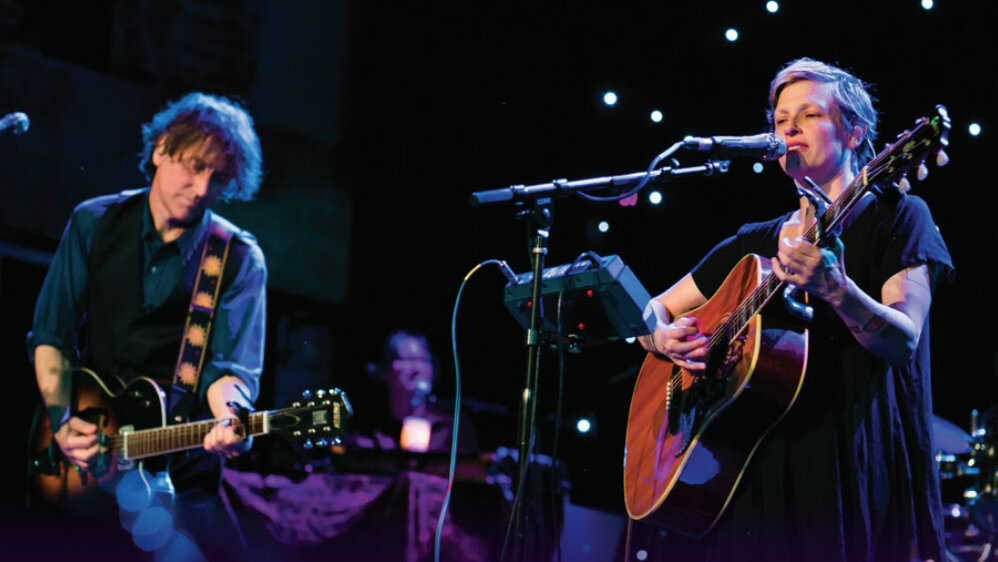
I first heard the heart-wrenching harmonies of The Weepies when I was in middle school and a friend of mine played their song “World Spins Madly On”. I was immediately struck by how the real-life couple’s voices complimented each other over the simple chord progression and slow cello. Made up of Steve Tannen and Deb Talen, The Weepies began making music together in 2001, releasing their first album, “Happiness” in 2004. Now, the couple have five studio albums, three kids, and are headed out on tour next month.


Steve Tannen and Deb Talen of The WeepiesSteve Tannen and Deb Talen of The Weepies

Steve Tannen and Deb Talen of The Weepies

Steve Tannen took some time to talk with The Siskiyou about their upcoming tour and what the duo have been up to since their last album, “Sirens”, was released in 2015. With no plans to release a new album in the near future, Tannen is feeling pretty relaxed about the whole thing. “I’m really happy to have a career and I’m pretty excited to always work when I can,” shared Tannen.  One song on their latest record that stuck out to me in particular was their cover of Tom Petty’s “Learning to Fly.” Tannen explained that it was an unplanned cover as the creation of “Sirens” was more unique than their past works. The other half of The Weepies, and Tannen’s wife, Deb Talen, had been diagnosed with breast cancer and was undergoing treatment and was unable to travel to record new songs. “We recorded in Iowa where she was getting treatment,” explained Tannen. “I called up every hero that I knew or could get in touch with, to help us put together a record. Everyone was so phenomenal [and] we had this [remote] super group together of amazing musicians.” Tannen would send recordings of himself and Deb to these musicians who would then record their parts and send the pieces back. “I just kept sending them songs and they kept knocking it out of the park. Eventually, I ran out of songs and we just kept playing in order to get them new music and that’s how that cover happened.” 

“Sirens” became a group effort, and “it made us feel really loved,” Tannen said. “It was definitely the most painful [album] to make. We didn’t know if Deb was going to be ok or not.” Throughout all of this however, the couple were overwhelmed with the kindness of their friends and fellow artists who took the time to work on this album with them. Tannen shared that the biggest lesson he learned from this experience was that, “People are really generous, you just have to ask for help…I’m still bad at it. I don’t know what it is about [humans] that make us think that we should do it all alone, but that’s definitely part of my character…I think the record’s really good and a lot of that has to do with us not being available to micro-manage it.”

This record proves it takes a village to raise a child, and you can hear the amount of love and care these artists put into it. Although The Weepies will not be accompanied by any of these musicians, the duo will be designing an intimate and nostalgic tour. With over 150 songs in their catalogue, The Weepies will be creating a night of reflection as they take the audience through their past works. The duo will be performing at the SOU Music Recital Hall on Saturday, March 28th. Tickets are on sale now.

Glastonbury Festival: 10 Years in the Making, Pt. II

Saturday

Saturday was my first full day with no volunteering and I had several things on the docket. I started my morning in the Oxfam marquee with a delicious full English breakfast. Did I mention that you get three free catered meals at the Oxfam campsite and each meal after that is only £7? 

Reason number three why volunteering at festivals is so great: I don’t know about other festivals, but Oxfam knows how to take care of their volunteers. We had access to delicious food nearly 24/7, either through the catering at the marquee or through the little food truck just outside of it, as well as a hot water stand with instant coffee, tea, and creamer; Both of which are only available for Oxfam volunteers.

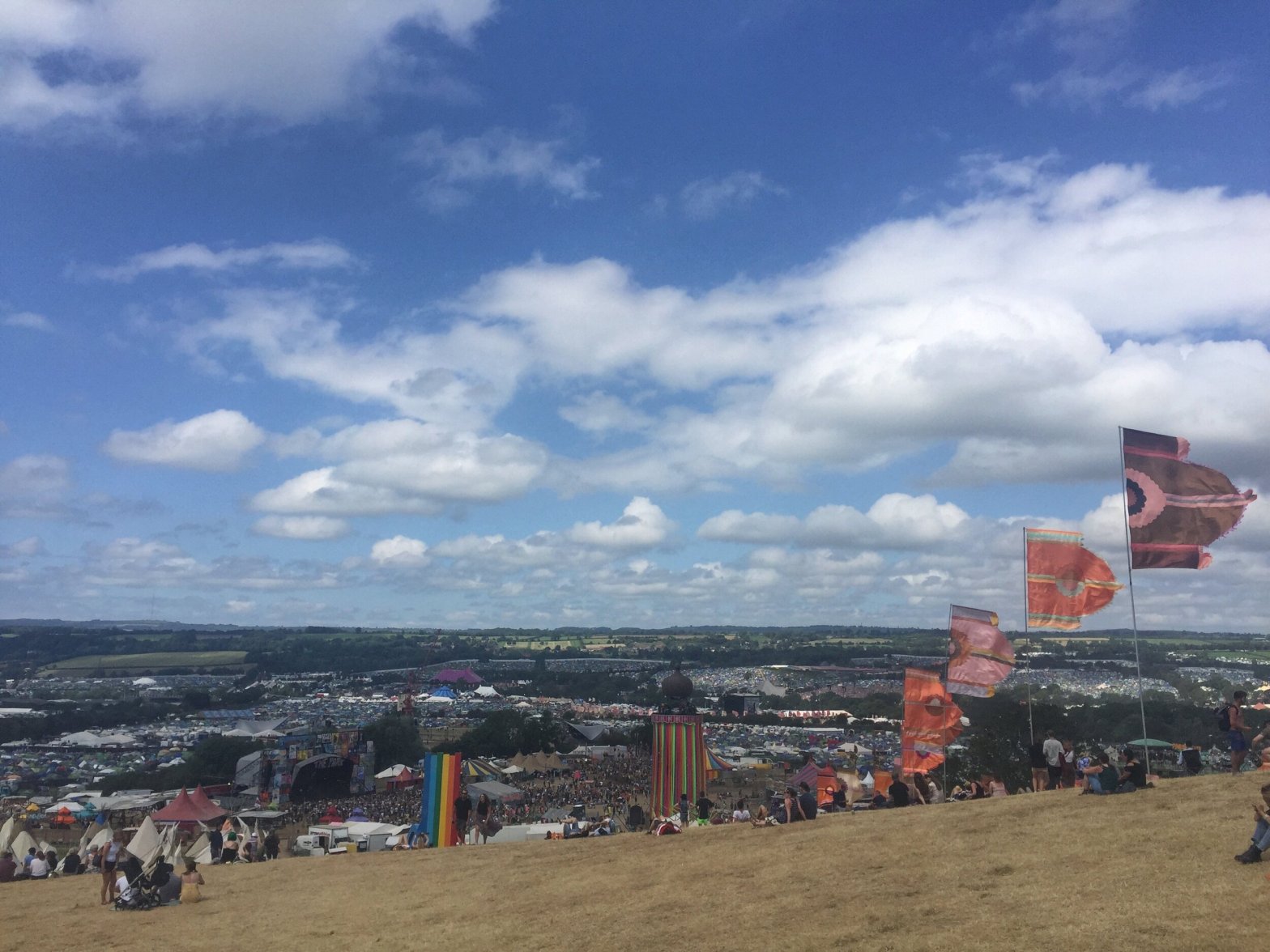
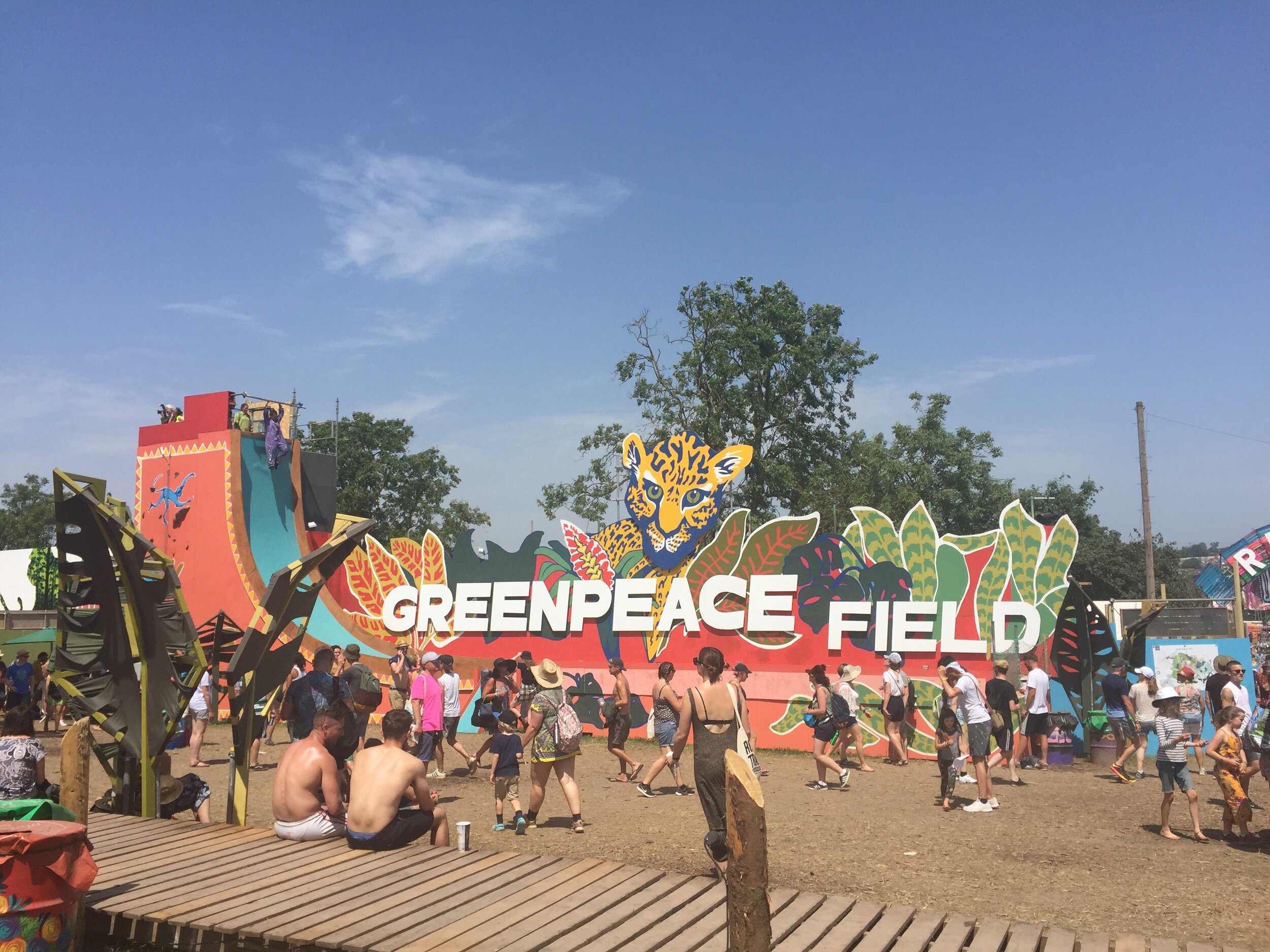
After my breakie and morning cup of tea, I headed into the festival and found the Croissant Neuf tent which is nestled in the Green Fields. Due to its vastness, Glastonbury holds several different “neighborhoods” if you will. Some of the festival’s most famous ones being Shangri-la and Block 9, both known for their late-night scenes and Burning-Man-esque art displays. I fell in love with the Green Fields, given its name because it houses Greenpeace’s stage, as it was usually a little more quiet, full of greenery and lots of hippie-type people that made me feel right at home. The Green Fields also encompasses the Healing Field, a place where people can relax in “one of several mystical and creative gardens; participate in ceremonies that celebrate healing and togetherness; join in a variety of free workshops from yoga and tai chi, dance and voice through to meditation and massage” (Glastonbury Program, 2019). I mean, what could be better than that? 

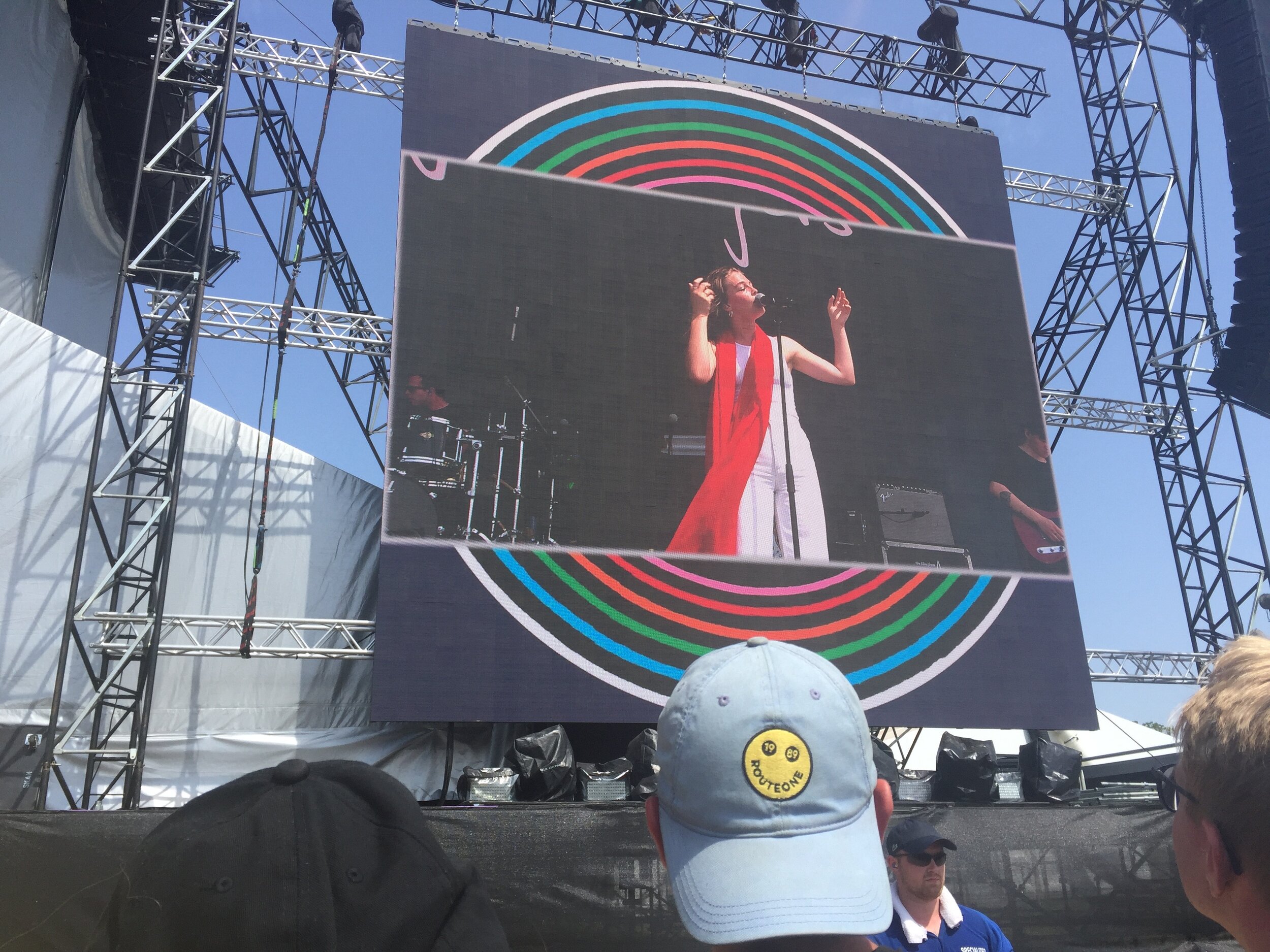
Saturday was set to be another hot day, so I spent most of the morning in the Croissant Neuf tent listening to a trio play some good ‘ol fashioned bluegrass. When I’d heard enough of the yodely-twangy music, I meandered towards the Other Stage (yes, that’s its actual name), found myself some lunch, and sat in another patch of shade to fuel myself before watching Maggie Rogers’ performance. 

Maggie Rogers performing at Glastonbury festival.

I saw Maggie when she opened for Mumford & Sons in London in 2018, and was thrilled when I found out she was coming to Glastonbury. The authenticity and genuine joy she brings on stage blows me away. I was close to tears and dancing my butt off throughout her set. During the show she told the audience, “All of this only matters if you let it in. Let us help you let go,” and oh boy, did that get us all wound up! The crowd never stopped dancing after that, and I still get goosebumps when I think about that performance. 

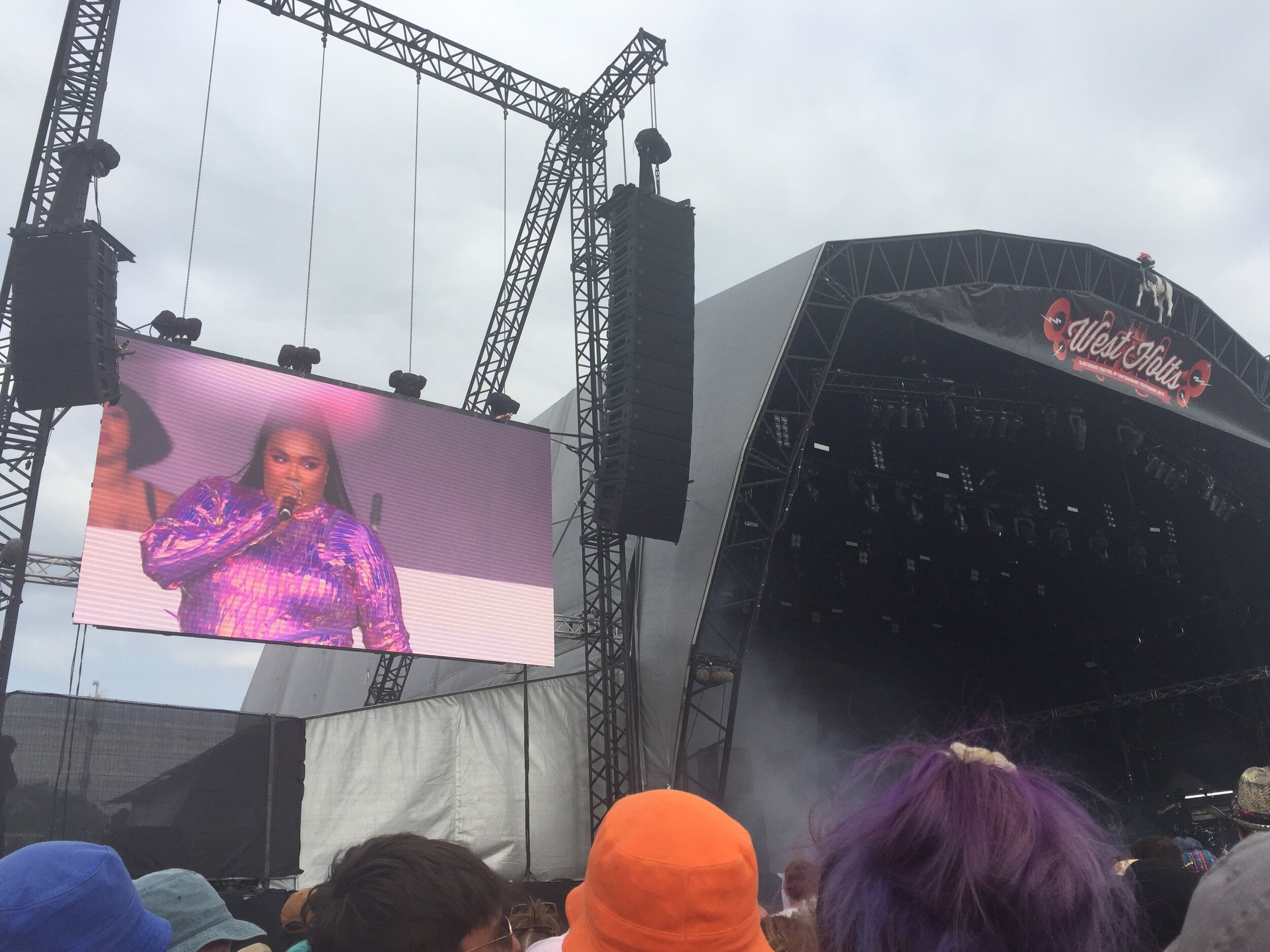
After Maggie finished, I met up with my friend Lucy to catch Lizzo’s set at the West Holts stage. I didn’t grow up going to church, but if church was anything like going to a Lizzo concert, I would be there every Sunday morning. Lizzo’s unapologetic self-love and positive attitude is infectious. Not only did she put on an incredible show with bodacious back-up dancers and booty shaking beats, she raised the crowd’s mood with her powerful words. Lizzo preached to us about the magic of loving yourself, knowing your self-worth, and feeling yourself all day long. During her performance, she told the audience to say a mantra of self-love to ourselves, “I love you! You are beautiful! And you can do anything!”, then turn to our neighbor and repeat it to them and then say it to Lizzo. This woman knows how to work a crowd and I left feeling lifted and inspired.

Lizzo performing at Glastonbury festival.

Lucy and I were joined by Hele after the set, and the three of us wandered through the booths in order to find some dinner. This took probably close to half-hour due to the sheer amount of food options Glastonbury offers, everything from steak and ale pies to Buddha bowls. I ended up going with a New Mexico inspired burrito which cured me of my hunger, but left me yearning for really good Mexican food. I decided to head back to my tent to rest up before the evening began and heard Liam Gallagher singing Wonderwall from the Pyramid Stage while changing in my tent. 

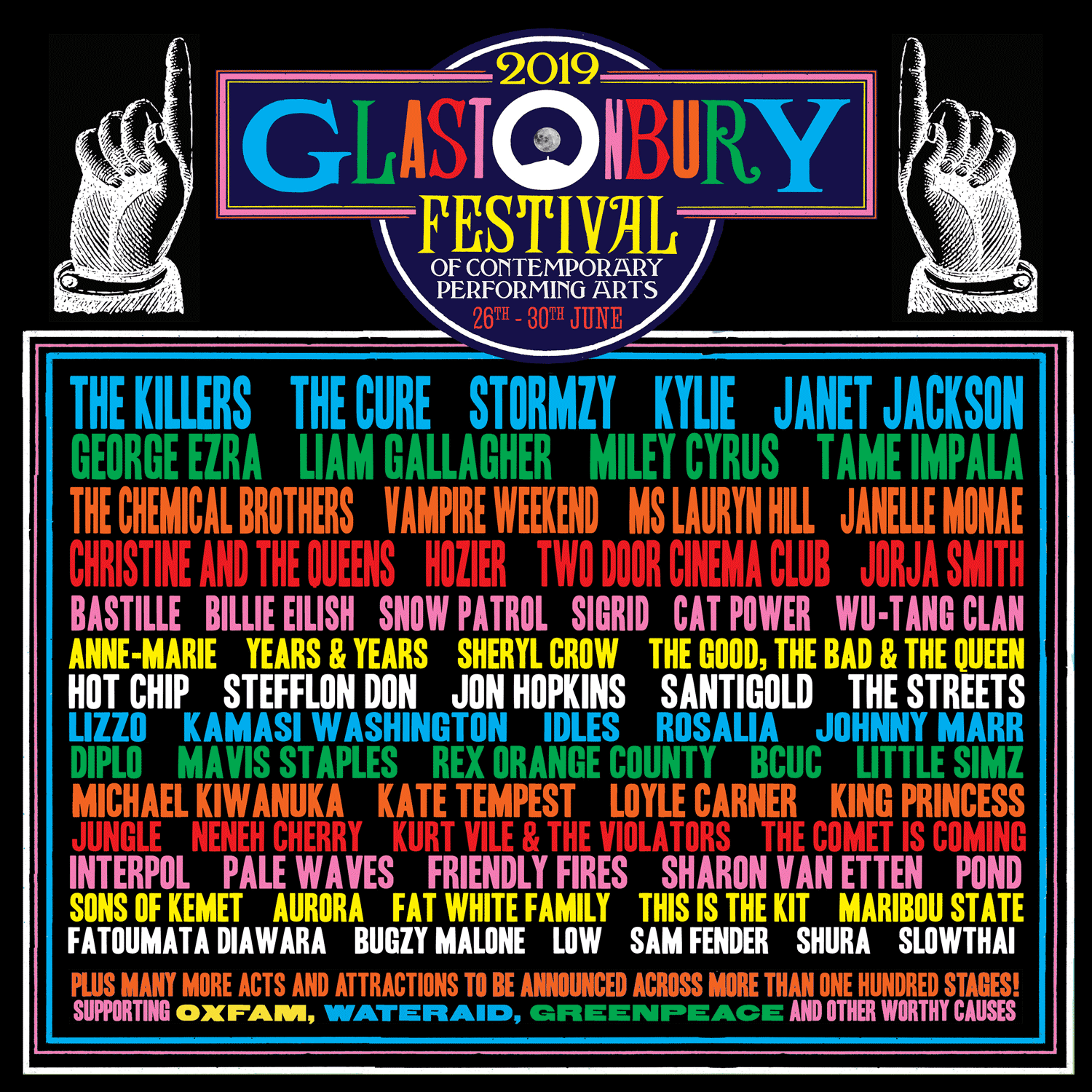
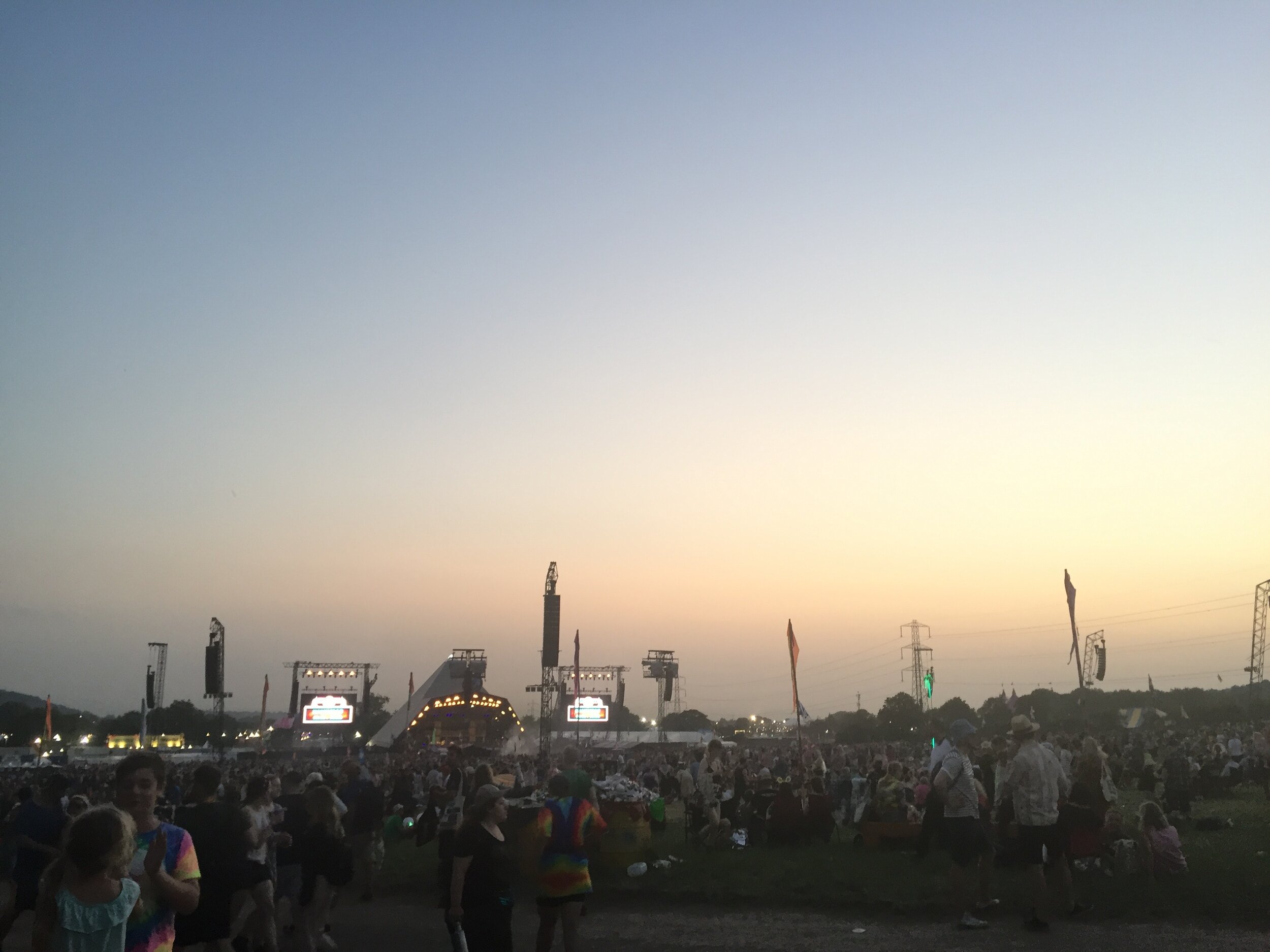
The Killers were Saturday night’s headliner, and I managed to find a spot on the road above the Pyramid Stage where there were slightly fewer people. I haven’t listened to The Killers since middle school, so watching them live was a blast from the past. Those guys still got it! While I was enjoying the show in front of me I was also loving the show behind. A group of very drunk Killers fans who were dancing in a circle and singing at the top of their lungs. 

The Killers performing at Glastonbury festival.

The Killers opened with their classic tune Somebody Told Me. I got such a kick out of people watching as many were singing and dancing as they walked by. Part way through the set the band was joined by The Pet Shop Boys who played their song You Were Always on My Mind and The Killers’ Human. Later on The Killers brought out Johnny Marr from The Smiths and covered a Smiths classic, This Charming Man. With Marr in the mix, the group ended the show with Mr. Brightside at which point the crowd lost any ounce of control they had held onto before. If you’ve seen the film The Holiday with Jude Law and Cameron Diaz, I was channeling the scene when Diaz’s character is blasting Mr. Brightside in her house. 

Sunday

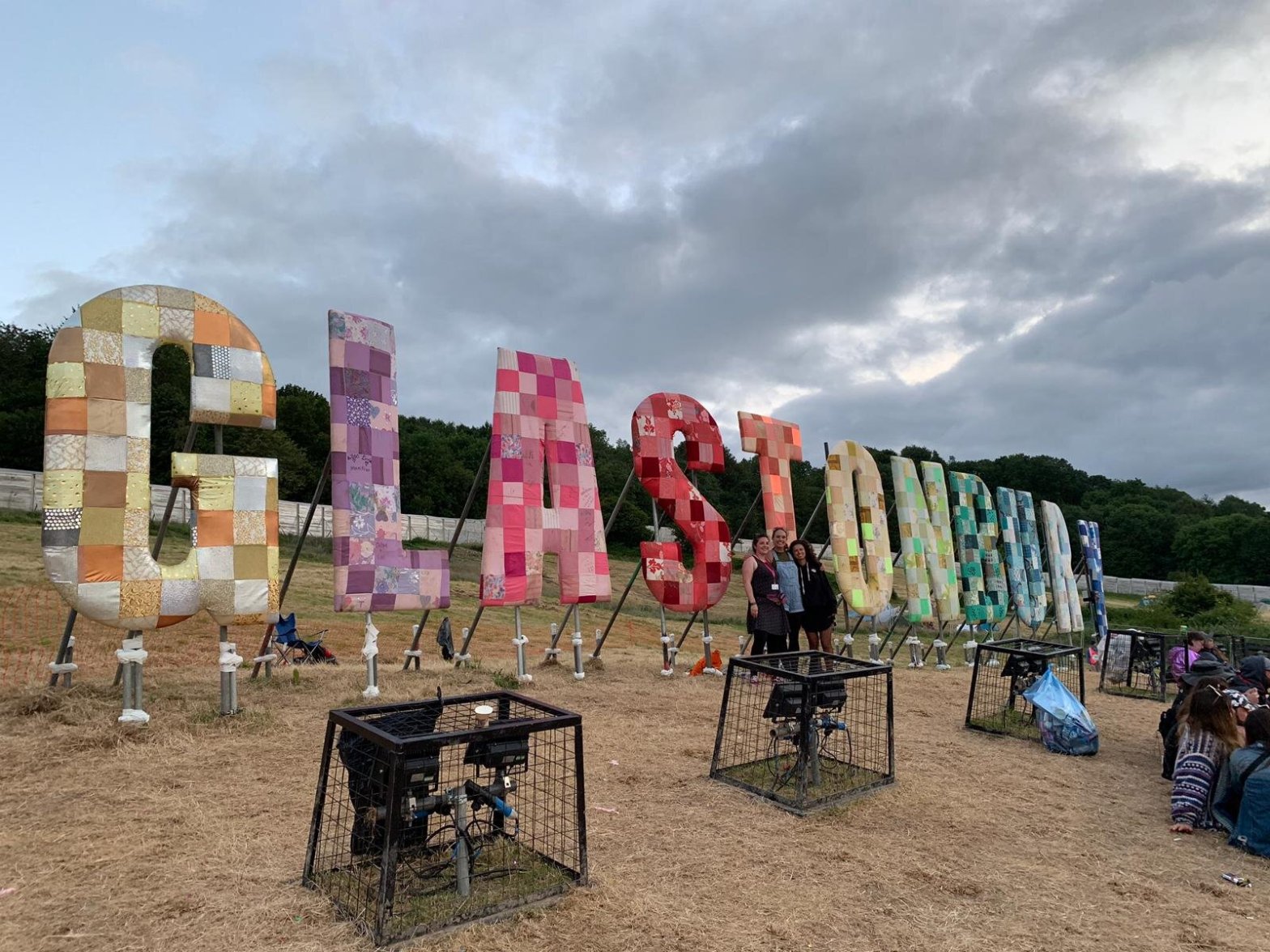
On Sunday, I meandered through the lush permaculture garden, located in the Green Fields, and people watched by the stone circle. I had a lot of fun exploring the festival grounds by myself and chatted with different festival goers throughout the day. I made my way up to the Hollywood style Glastonbury sign and talked to a lovely couple who were marveling at the expansive view. From where the sign is located you can see the entire festival, and it is unreal. 

It’s important to give yourself a lot of time for exploring and moving between stages at this festival, as it can take up to a half hour depending on the crowds and who’s playing. I slowly made my way across the festival to the John Peele Stage where Dermot Kennedy was scheduled that afternoon. This Irish sweetheart is full of talent and possesses a deeply expressive soul. The mixture of hip-hop beats and acoustic guitar with a heartbreaking voice is something new to me. His supporting band were clearly having the time of their lives, and a big shout out to his drummer who was keeping it tight; I was thoroughly impressed.

Dermot Kennedy performing at Glastonbury festival.

After Dermot, I slowly made my way back to my tent, slow owing to the giant crowd Kylie Minogue had collected at the Pyramid Stage. I rested at the Oxfam sight with a few friends, a cup of tea and a bowl of ramen before heading back out for the evening. Matt Corby was the next on my list which sadly meant I would be missing Vampire Weekend, but you have to make compromises at Glastonbury and enjoy what you do get to see rather than bemoan what you missed. Honestly, I didn’t think that I would ever get the chance to see Corby live. He was one of those artists that felt so far away that going to his shows would always be a fantasy. His new album, Rainbow Valley, has been in my heavy rotation since it was released last year. The combination of jazz, soul and folk is heavenly and refreshing, and his voice makes my knees go weak. I was a little saddened by the lack of older songs on his set-list, but overall it was a great show. I was mostly in joyous gratitude that I was in the same place as Matt Corby. 

Matt Corby performing at Glastonbury festival.

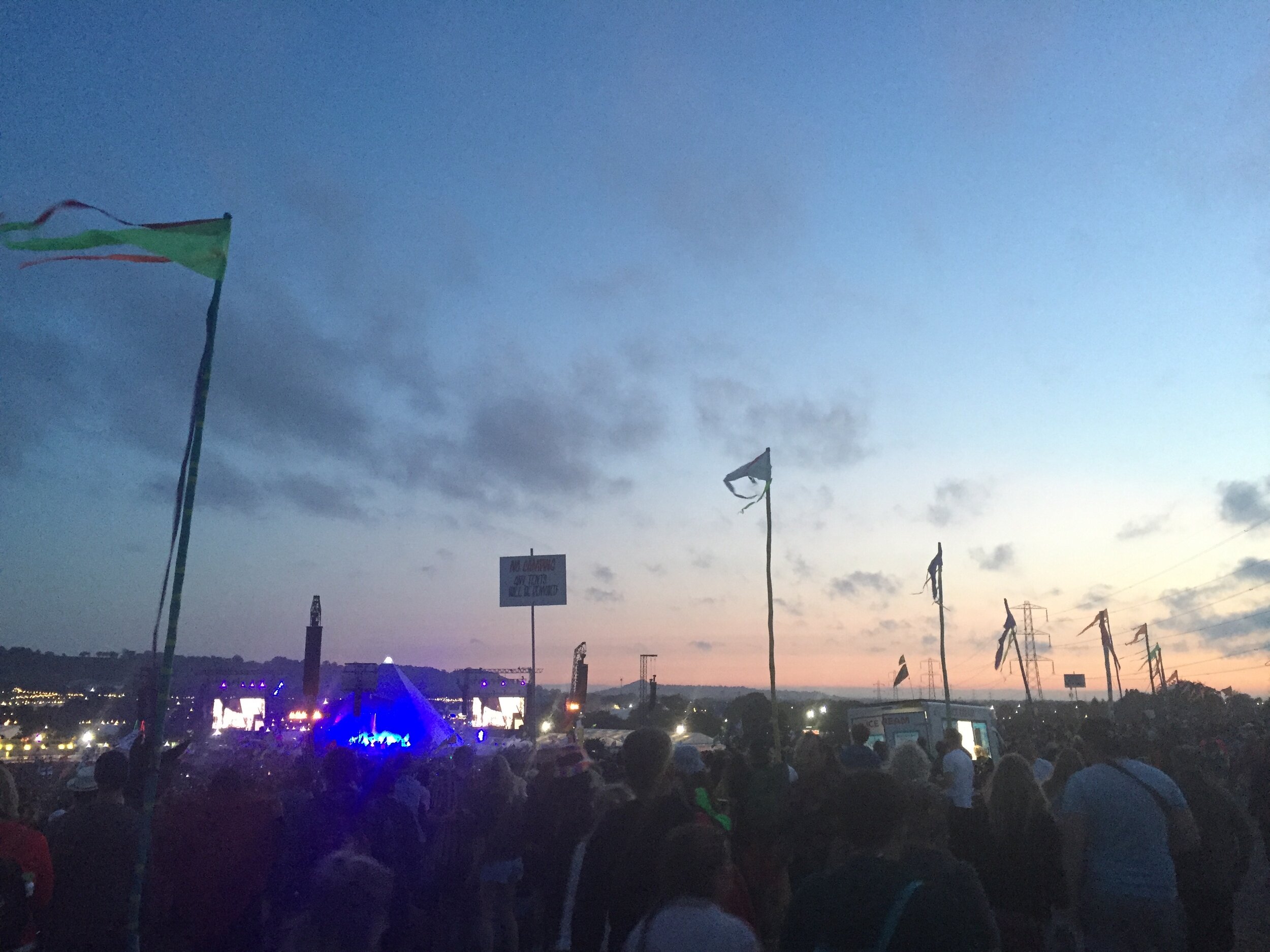
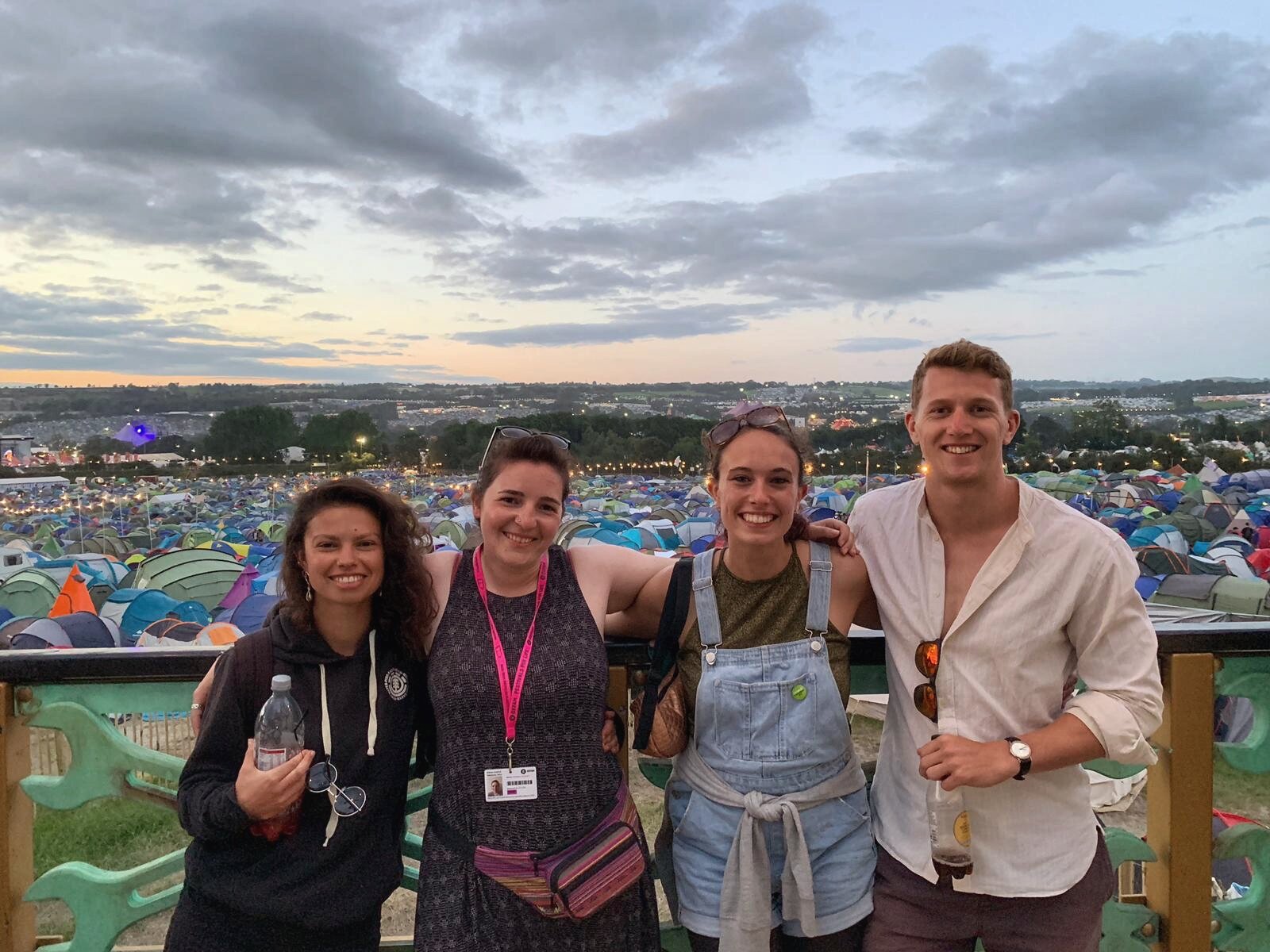
My last evening at Glastonbury was spent with my Oxfam friends, Hele and Zoe, and our new mate, Tom, whom we’d met at the Matt Corby set. The four of us strolled up to the Hollywood style Glastonbury sign for the obligatory selfie and then to the Brighton style pier that gave us a magical twilight view of the festival. Eventually, we made our way to the Other Stage for Christine and The Queens. I had never heard of this group beforehand and was disappointed only because I was a few drinks in and ready to dance, but their form of pop music is more subdued and not the best for shaking booties. 

Monday

I said goodbye to Hele the next day who was leaving on the early bus, before slowly packing my things and preparing for my departure in the later afternoon. I was feeling ready to be back in the real world, but sad to be leaving this magical place. Lucy and I had a sweet goodbye before I hopped on the bus which took me back to Bristol. I arrived at my friend’s house exhausted, exhilarated, and in desperate need of a shower. It was hard to put into words what the festival was like as I discussed who I saw and what I did, and that feeling has not changed. It’s surreal to think that I crossed Glastonbury off my list with almost a carefree flick. Sometimes I have to remind myself, “Oh yeah, I really did that!” I am thrilled to share this experience with everyone who is curious and there is also a feeling of casualness about it because I know that this is not a “once in a lifetime opportunity”, this is what my future looks like. Going to Glastonbury as well as the other festivals and gigs in the UK this year cemented in my brain that this is what I am here to do. I want to experience the community that music creates with people from all walks of life and help musicians share their stories with the world. So here’s to more Glastonburys, more tiny gigs in pubs and coffee shops, and more connections you never thought were possible.

Glastonbury Festival: 10 Years in the Making, Pt. I

I have a confession to make. I have really struggled to write about my experiences at Glastonbury Festival this year which is why, among other reasons, this article is so late. I have been feeling a huge amount of self-induced pressure around this piece and I’ve allowed it to keep my hands frozen. Going to Glastonbury has been on my bucket list for nearly ten years, and the intensity I’ve created around writing about it comes from this idea that the festival was this TOTALLY AMAZING LIFE CHANGING EXPERIENCE AND IF I DON’T DO IT JUSTICE I’LL NEVER WRITE AGAIN! *Deep exhale* 

When I think back to the last sweltering week of June when I was at the festival, I am not overwhelmed with something I could never put into words, rather I feel calm, grateful, and solid in my belief that I will attend Glastonbury, and other festivals like it, for many years to come. Keeping this thought in mind, let’s dive into my Glastonbury 2019 adventure!

When I was about 16-years-old, I created a vision board for Glastonbury. I cut out pictures of the Pyramid stage (the main stage) and bands that had performed there in the past and ones that I wanted to see in the future. This intentional collage was pinned up on my bedroom wall for several years until I was tired of looking at it and took it off the wall. However, Glastonbury still remained in the back of my mind even without the vision board in plain sight. 

Fast forward nine years to February of 2019, where I found myself signing up to be an Oxfam volunteer at Glastonbury and dropping a £250 deposit (the price of a ticket and almost equivalent to $300) to reserve my spot. It seemed expensive at the time, but all deposits are reimbursed at the end of the summer, which was great for me since I came back to the States with $10 to my name.

Reason number one why volunteering at a festival is so great: you get to attend for free (more or less).


1545web.png1545web.png

Signing up to volunteer could not have been easier. I had previously signed up for the Oxfam volunteer email list in order to be alerted when volunteer applications were open, so I was able to sign up for Glastonbury easily. They require basic personal information, any previous volunteer work (if it’s festival related, that’s even better), and one outside reference. You do need to be legally allowed to volunteer in the UK and as I had a student visa I was in the clear. I recommend doing research about visa requirements before submitting your own application. Through your account you can also sign up for multiple festivals around the UK, such as Reading & Leeds or Latitude. Many of the people I met were participating in a full summer of volunteering. In May, I attended a one-day Oxfam workshop in London. The workshop leader gave us a run-down of what Oxfam would be asking us to do, what they expected of us, and answered any questions we had. After that, I just waited for June to come along!

So it begins…

Reason number two why volunteering at a festival is so great: you meet amazing people and make friends with almost zero effort.


PHOTO JUL 01, 1 58 40 AM (4).JPGPHOTO JUL 01, 1 58 40 AM (4).JPG

I took the Oxfam bus from the Bristol train station to the Glastonbury festival site which is just outside of the town of Glastonbury. It was here I met a lovely woman named Hele (pronounced like ‘heli’ in helicopter), who was also a Glastonbury first-timer, and the two of us became tent neighbors as well as festival buddies for the rest of the weekend. By the next day, our duo had turned into a trio with the addition of another woman, Lucy, who Hele had met earlier that day. The three of us went into the festival on Wednesday night and watched the fireworks exploding over the grounds, marking the beginning of Glastonbury.

Oxfam requires you to work three, eight-hour shifts during your time at Glastonbury. The festival ran from Wednesday through Sunday, so all in all it’s really not too much of a sacrifice. Oxfam hires nearly 2,000 volunteers for Glastonbury alone, so choosing your own shifts is not an option, although you can always switch your shifts with someone else who is keen. I lucked out and got all of my shifts done in the first three days of the festival without having to do any overnight stints (which probably would have killed me). Wednesday and Thursday, I worked from 2pm to 10pm, and Friday I pulled an early morning shift from 6am to 2pm, which meant I had the rest of the day to see music! The late night headliners didn’t start playing on the Pyramid stage until Friday, and most of Wednesday and Thursday were less well known groups.

I was placed at one of the pedestrian gates for all three of my shifts, checking wrist bands and handing out programs. The people I was working with were all lovely and engaging and the festival goers coming in and out were great fun to talk to and watch. I continually got a kick out of people hearing my accent and asking me the usual questions: “Where are you from?”, “Did you come to the UK just for this festival?”, “Is this your first time at Glastonbury?” 

Friday, Let the music begin!

Friday had all the festival goers boiling as the temperature was in the high 90’s, and many people, including myself, suffered from varying degrees of heat exhaustion. I clocked out at 2pm and headed into the festival in order to catch Bastille’s set at the Pyramid stage. There is very little shade around the Pyramid stage, but I was able to find a free patch underneath a large evergreen tree and recover from the heat before diving into Bastille’s crowd with my new friend, Lucy, by my side.

Bastille brings back memories of Ireland. Rolling green hills dotted with sheep seen through a tinted bus window, Irish accented DJ’s introducing Bastille’s song Pompeii for what feels like the millionth time. I felt like that song was following me and not in a good way. The opening “Eh eh oh, Eh eh oh” wound its way deep into my brain and would pop up at the worst times, i.e while I was trying to fall asleep.

In 2013, I found Bastille’s album, Bad Blood, and the annoyance was replaced with grateful nostalgia. I love that album but lost touch as the years rolled by. Last May the lads released their song Joy, a single from their upcoming album Doom Days, and I felt my love for them softly smoldering once again. Watching them at Glastonbury was like meeting an old friend whom I hadn’t seen in years. There were a few earlier songs that reminded me of why I love this group and new ones that demonstrated to me how they had evolved as musicians. Bastille has shifted to more hip-hop beats with the bonus of a group of extremely talented gospel singers. When they played Joy they were joined by Lewis Calpadi, a scottish singer who’s song Someone You Loved and hilarious Instagram posts are gaining him immense fame.

Lucy and I stuck around to catch George Ezra’s set right after Bastille. To be perfectly honest, the main reason I saw Ezra was to have some bragging rights. Unfortunately, he was nothing to write home about. His band was on fire and seemed to be really enjoying themselves, but Ezra was subdued, which was partly due to a sprained ankle. He continued to tell stories in the same monotone way and delivered his punchlines with an off hand attitude that was funny the first time, but grew old very quickly. Stage presence is really important and I didn’t vibe with his.  I was exhausted and my feet were hurting so bad I wasn’t sure if I could walk back to my tent by the time the sun started to go down. Friday night’s headliner made all of this go away.

Stormzy was easily my favorite performer that I saw that day. He is one of the most famous grime artists in the UK currently. Grime is a form of electronic dance music that draws influences from dancehall, ragga and hip-hop that began in London in the early 2000s. I had been introduced to him only a few days before the festival and he has become a new favorite. Stormzy made history this year by being the first black British artist to headline Glastonbury and, at 25, is the second youngest solo headliner, the first being a 24-year-old David Bowie in 1971. He was overflowing with gratitude throughout his set, even getting close to tears a few times. Stormzy’s performance made me inspired and hopeful for the future, and incredibly grateful that people like him exist. Everything about this show was incredible. The lighting, the dancing, the interludes between songs – one of which had two ballet dancers come out and perform while captions on the screen behind them told the audience that ballet slippers had only recently been made to incorporate all skin colors.


PHOTO JUN 28, 1 47 36 PM.JPGPHOTO JUN 28, 1 47 36 PM.JPG

Lucy and I returned to our tents elated by Stormzy’s performance and excited for the next day.

Gentlemen of the Road at All Points East: A Once in a Lifetime Opportunity

On June 1st, I found myself strolling into London’s Victoria Park already sweating from an uncharacteristically hot English day and bubbling with excitement. Not only was I going to see Mumford & Sons, my favourite band of all time, I was attending one of the Gentlemen of the Road (GOTR) stopovers which I had been dreaming about for nearly ten years. Created by Mumford & Sons, GOTR began several years back as a way to bring their own “community of music lovers together with those communities [Mumford & Sons] encounter” (GOTR Website, 2019).

A classic stopover consists of Mumford & Sons bringing a festival to a town that may be smaller and less likely to have big musical names. The band collaborates with the business owners and integrates the local community into the festival itself while also bringing some of their own favourite artists and musicians. Mumford and Sons will be taking GOTR to Ireland in a few months, and this year GOTR collaborated with All Points East to create a line up and communal music experience that would blow everyone’s socks off.

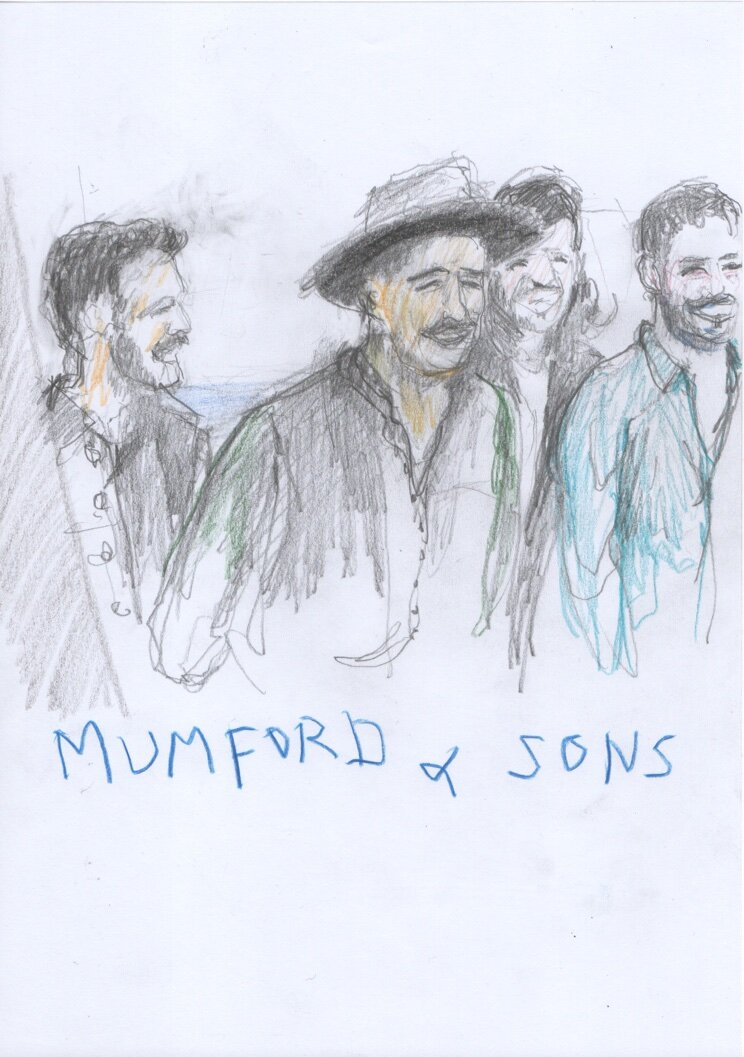
Drawing of Mumford & Sons
Mumford & Sons by Virgile Demo

The festival opened with Dizzy, a Canadian band, whose indie pop anthems are other-worldly and often make the listener feel like they’re floating through space. This four-piece group is part of Communion, a promotional company and record label established in 2006, by Ben Lovett (Mumford & Sons) and Kevin Jones (Bear’s Den), which began as a monthly live music night at the Notting Hill Arts Club. Dizzy has joined the likes of Ben Howard, Bear’s Den, Nick Mulvey, and Gotye, and their live show proved that they were more than up for the challenge. Although Dizzy may not have had a huge crowd, the group was enthusiastic and grateful for the folks who showed up. Their lead singer, Katie, was beaming from ear to ear for the entire set and the four of them were clearly having a blast even though, as the drummer stated, “Oh, it’s hot London.”

While Dizzy was playing their hearts out, I caught sight of Mumford & Sons’ pianist, Ben Lovett, watching the performance. I took a deep breath and made a bee-line for him, knowing that this was a chance I couldn’t miss, and I am so glad I did! Ben is such a lovely guy and it was great to see him out supporting his fellow musicians. The two of us chatted a bit about Dizzy and the lads’ upcoming tour before snapping a photo and having a quick hug. I don’t get star struck too often, but I was shaking after that interaction; it’s a very surreal feeling to meet famous people in person.

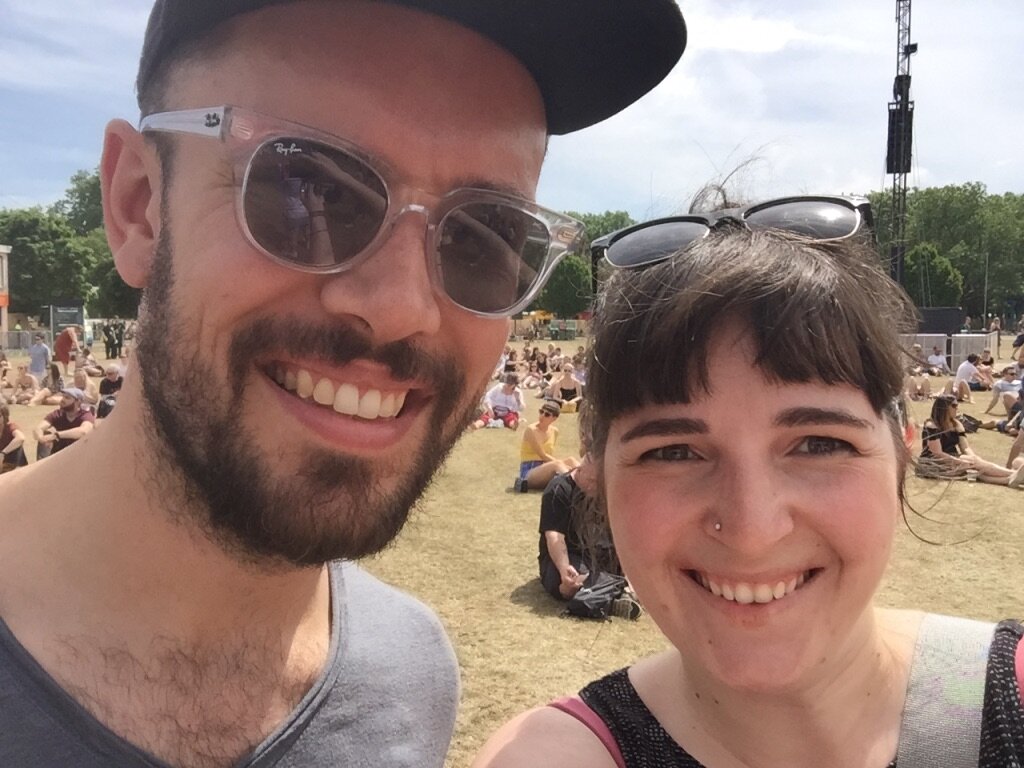
Two people smiling at a camera taking a selfie outside.
Ben Lovett (Mumford & Sons) and I

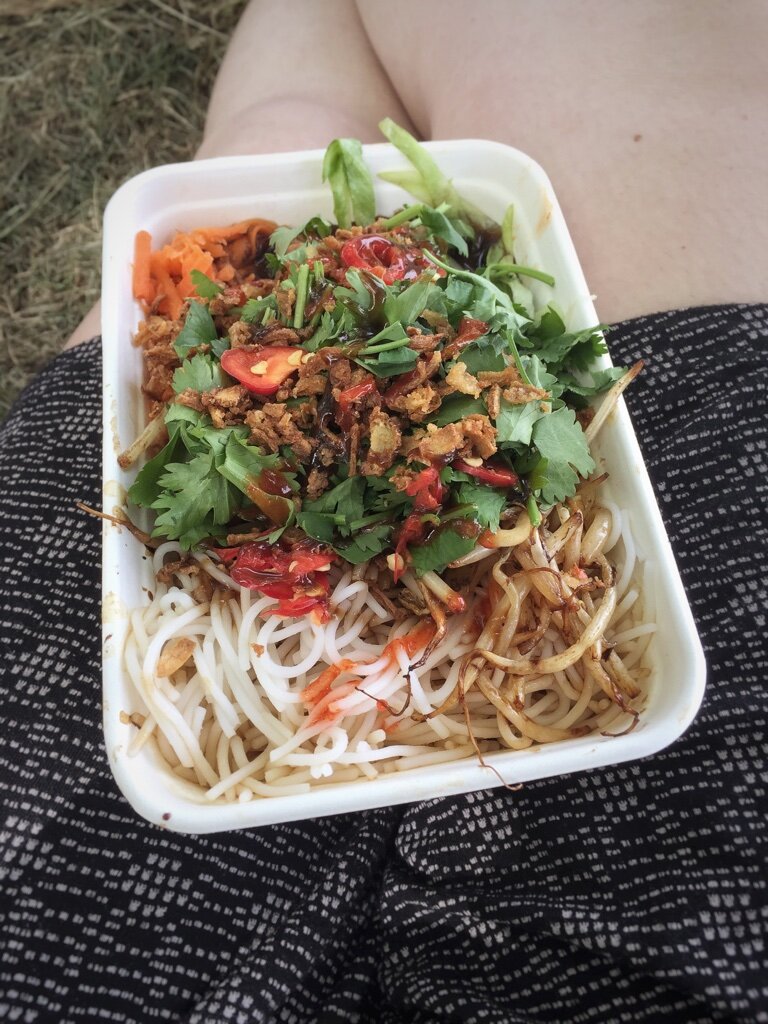
After Dizzy finished, I ventured off toward the many food trucks that lined the edge of the park. Earlier I had caught sight of a Vietnamese noodle shack and located it next to one of the tinier stages. I ordered a pulled pork noodle bowl that came with rice noodles, pickled carrots, bean sprouts, pulled pork and crispy pork rinds! I inhaled the entire thing (as I was starving) and immediately regretted it as the hidden jalapeños and massive amounts of sriracha I had dumped on made my nose run and my eyes leak. After gulping down some water I found my way to the main stage and sat in the shade while listening to the beautiful voice of Gretta Ray, a singer-songwriter from Australia, and performing one of my favourite activities – people watching.

Closeup of a Thai noodle dish in a to-go container.
Pulled pork noodle bowl

Smiles and laughter were overflowing all around me, and even though I came to the festival alone, I didn’t experience one moment of loneliness. Of course, a lot of the credit must go to the All Points East (APE) team who have worked tirelessly to create such a fun and relaxed festival for locals and tourists alike. Spanning over ten days, APE offers two weekends of music with some of the world’s most exciting artists as well as four days of free entry and community activities known as “In the Neighbourhood”. The collaboration between APE and GOTR generated an even larger community that shared the same goal: designing a festival that was all about connecting through music – no matter what our differences may be.

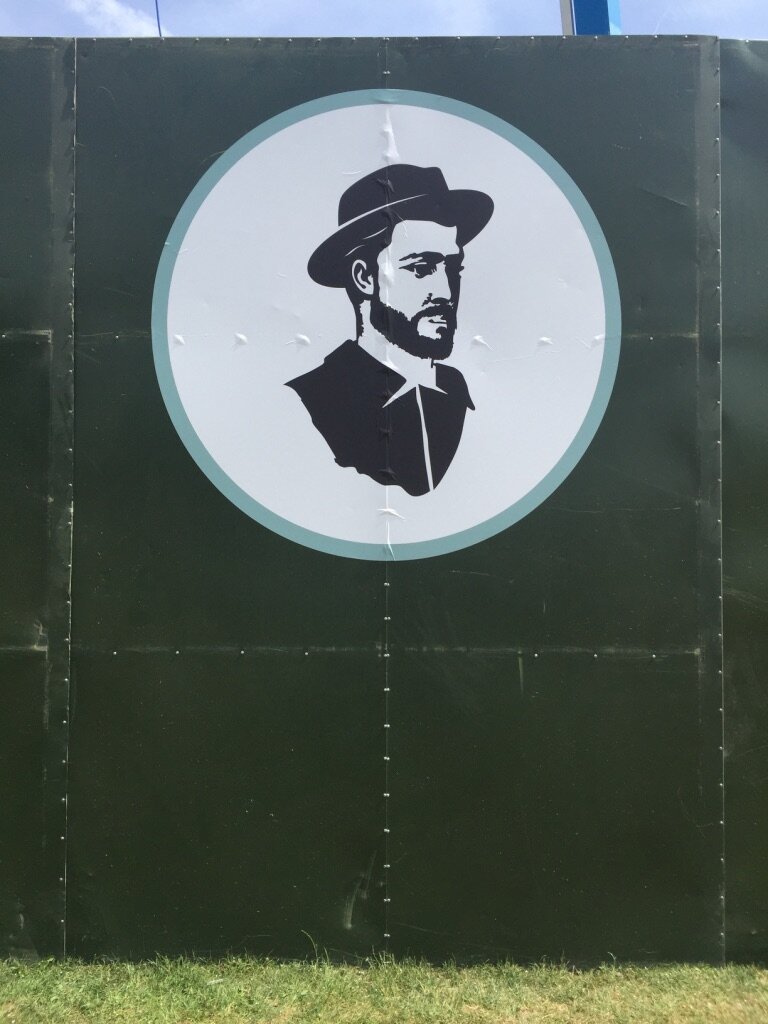
I caught up with Ben Lovett of Mumford & Sons after the festival and asked about the experience of working with APE. He responded, “We were very grateful that they were up for collaborating as purely as they were. They really gave us complete rein over the line up, which was cool, and obviously onsite branding. To be able to transform the space into a Gentlemen of the Road stopover was amazing.” The entire space had been changed into a GOTR festival with the lads’ signature wings logo and gentlemen silhouettes posted on flags throughout the park.

A painted silhouette of a bearded man with a hat on a wall.
The Gentlemen of the Road logo could be found everywhere around the park.

Ben was also struck by how lucky he and the rest of the band have been with the beautiful weather they’ve experienced playing at outside venues in the UK such as Olympic Park and Hyde Park. “We were just blown away weather wise, because that was our fourth big outdoor show in London, and every time it’s been the best weather of the year! And that just puts everyone in a good mood, especially in the UK because [no one] knows what to do with themselves. So, to have the sun beating down and to go out on stage during the sunset and to have that moment was great. It literally could not have gone better from our point of view; we were very happy.” The surprisingly good weather brought forth laughter and huge grins from the festival attendees, and the feeling of community amongst these happy strangers was almost tangible.

After Gretta Ray finished her set, I strolled over to the rail in front of the main stage and found several people who were representing Agora, a Facebook community created by Mumford & Sons for their fans. This group consists of over 10,000 people and is full of pure love and support, and at every Mumford concert you will see people with shirts saying “Agora is Awesome” or signs with a similar phrase printed on them. It was such a pleasure to meet these individuals in person, as I had only interacted with some of them through the magic of the internet. Shortly after I introduced myself to the group, the immensely talented, not to mention gorgeous, Tamino, took the stage and I paused my conversation to watch his performance.

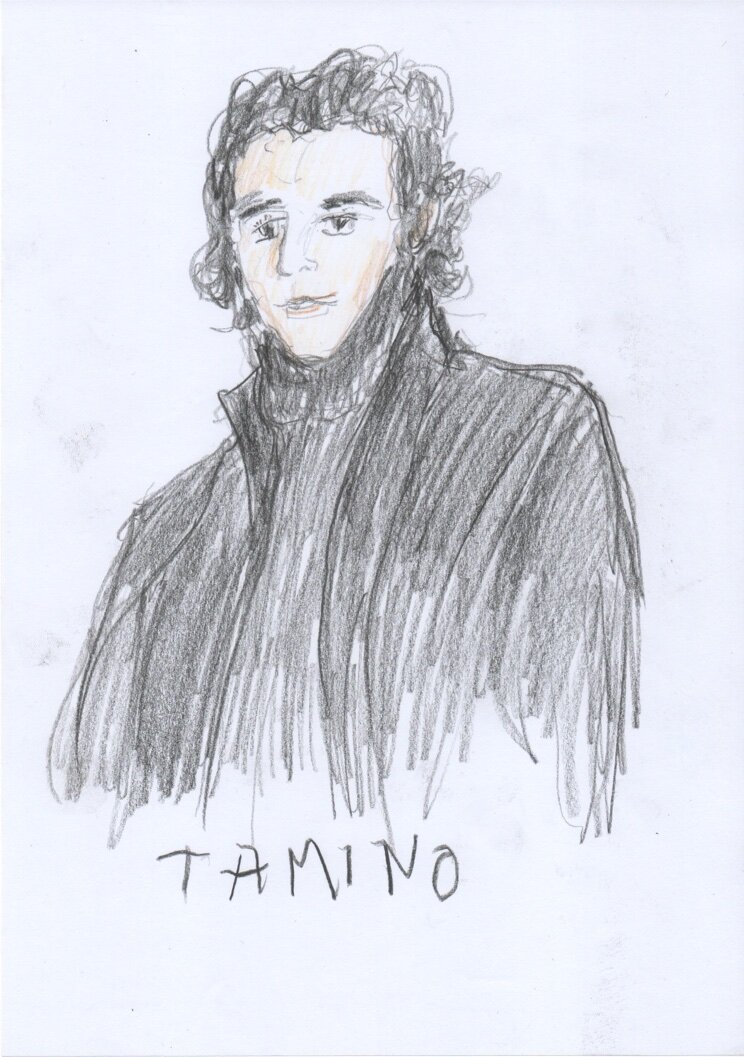
A drawing of the artist Tamino.
Tamino by Virgile Demo

Hailing from Belgium, Tamino’s hypnotizing voice and use of traditional Egyptian and Lebanese vocals are hauntingly beautiful. Thanks to Communion, I discovered Tamino several months ago and fell in love with his unique yet somehow familiar sound. The artist was joined on stage by a keyboardist and a drummer, although he played a few songs solo throughout his set. It seemed to me that Tamino is a shy bloke, but the few smiles and words he shared with the audience were breath taking and genuine. I was only sorry that he didn’t play longer, as I could have listened to him all day.

After Tamino finished his set I meandered towards the food trucks with two fellow Agorians. Thanks to a mutual love of Mumford & Sons, I connected with these lovely people… and isn’t that what music is all about? While the two of them grabbed rice bowls full of veggies and other delicious bits, I treated myself to a pint of Lagunitas IPA, a brewery that’s not too far from my hometown in the States. The three of us found our way back to the main stage to catch the last half of Jade Bird’s set.

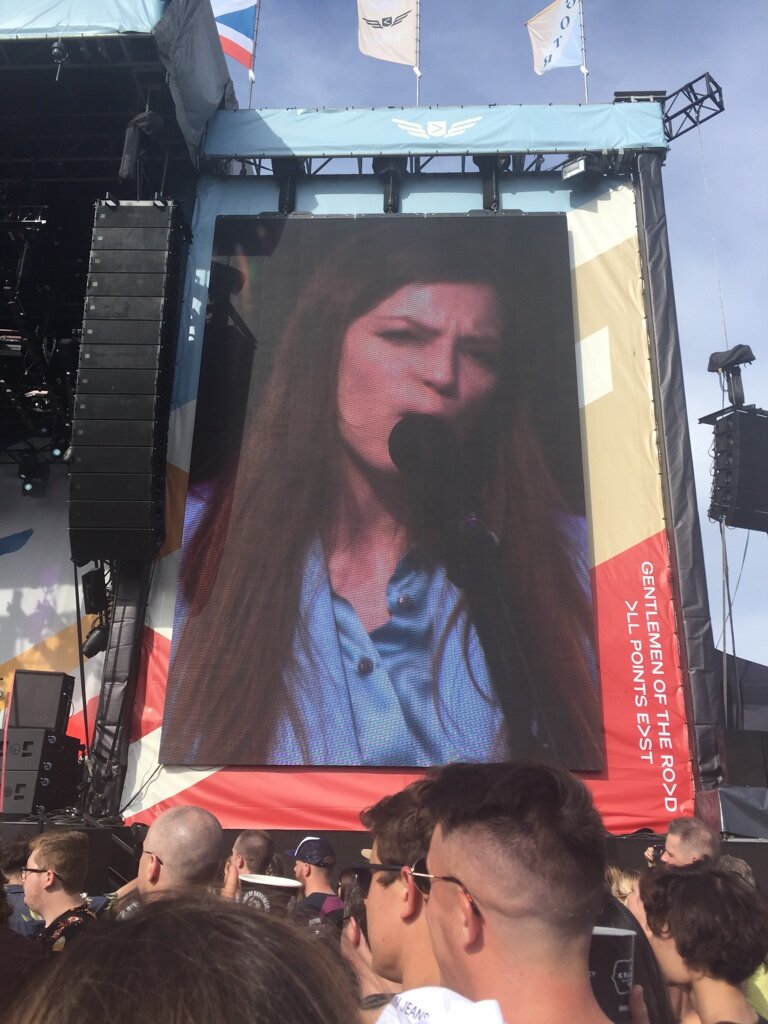
Singer Jade Bird on a large screen next to a stage/
Jade Bird sings to a happy crowd

The park was beginning to fill up at this point, and we had to push our way through the crowd in order to reach the rest of our Agora group. I was not particularly familiar with Jade Bird, as I only began listening to her after I bought my tickets for the festival, but, after seeing her live, I have officially become a fan. This 21-year-old is a powerhouse performer and her early introduction into music has clearly given her an edge as she has been touring professionally for the past three years. I was completely blown away by her passion and I can’t wait to see what the future holds for her!

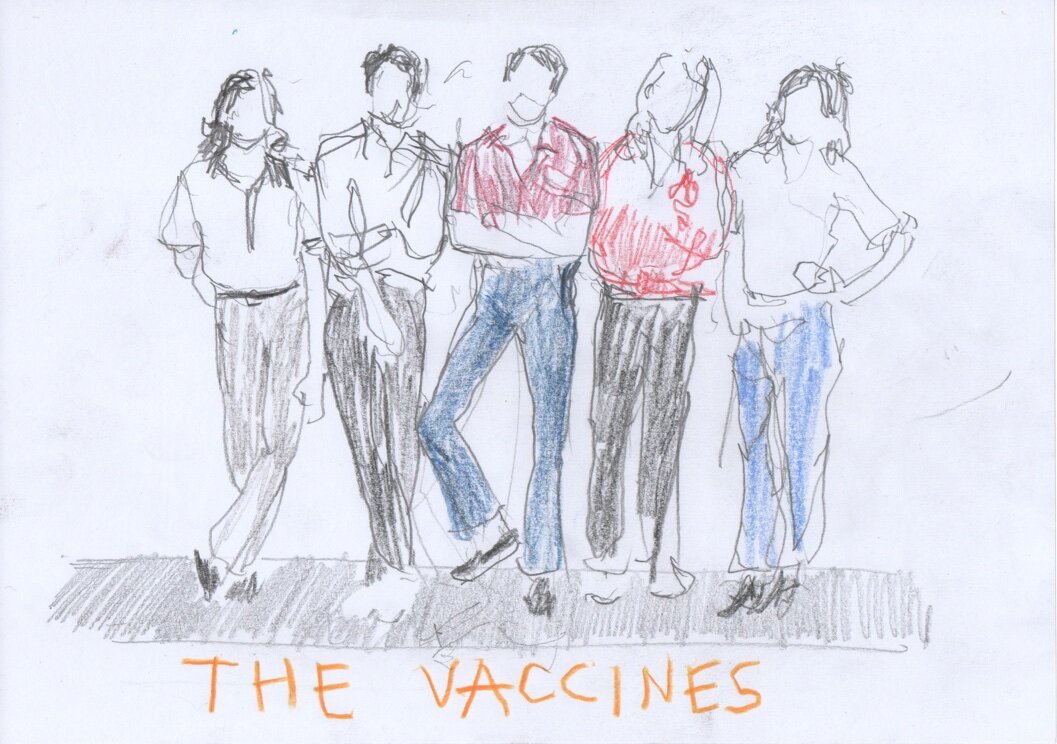
I stuck around the main stage when Jade Bird had finished, excitedly awaiting the arrival of The Vaccines. I had seen these lads at the Brighton Dome earlier this year and was so grateful for the chance to experience their live performance for the second time. I was also prepared for the mosh pit that would inevitably knock me off my feet and decided to embrace it.

I have never been a huge fan of rowdy crowds because I felt like it took away from the experience of listening to the music, but this time I wanted to experience a Vaccines concert in its full craziness, and I was not disappointed. The lads put on one of hell of a show and the audience was overly enthusiastic. Songs like “I Always Knew” and “If You Wanna” brought the moshing to a high level, and the laughs and constant “sorries” if someone was pushed forward into another became part of the music.

Drawing of the band The Vaccines.
The Vaccines by Virgile Demo

At the beginning of the festival I had planned to see the acts that were playing at the other stages, as there were four in-total, later in the day. However, by the time The Vaccines were finished I knew that moving to the other stage would mean sacrificing the spot I had secured just feet from the railing. Although it broke my heart to miss Leon Bridges’s performance, my priorities were to be close to Mumford & Sons when they closed out the festival. I was not going to be that asshole who pushes their way to the front and takes away space from the people who have been there all day. Dizzee Rascal took to the stage after The Vaccines, and I was pushed back from my prime spot by several, obviously drunk people who had shoved their way towards the railing.

Although Dizzee isn’t really my type of music, he is an incredible performer. The crowd absolutely loved him! Dizzee is considered to be one of the pioneers of grime music, and I heard several people commenting on how interesting a combination it was to have Dizzee’s performance followed by Mumford & Sons. This is why it’s great to have a festival curated by a band you adore, because you get to learn more about their own musical tastes, and I love that their genre choices are as eclectic as my own. It’s also a way to make the community of festival goers even stronger and more diverse!

Dizzee left the stage and there was the usual shuffling in the crowd as people left to use the toilets, grab food or head home. At this point I knew that I was cemented in my spot until the festival ended, which meant I was stuck with the group of obnoxiously loud drunks that were singing/screaming every five minutes. I am all for enjoying yourself at a festival, and that looks different for every person, but it is possible to have fun at a festival and not be the jerk that ruins the show for everyone else. I am truly grateful that this was not my first-time seeing Mumford & Sons because these folks were thoroughly distracting, and I found myself struggling to fully enjoy the concert.

I don’t want this to turn into a lecture of how drunk people are the worst…but honestly, that’s how I felt at the moment, and I could tell the people near me felt similarly. I hate being that person who tells other people to be quiet but ended up doing it several times during the show. All I will say is by all means have fun at concerts while keeping in mind that you are not the only person in that audience, so be respectful. Find a buddy who can keep you in check if you’re struggling to do it yourself.

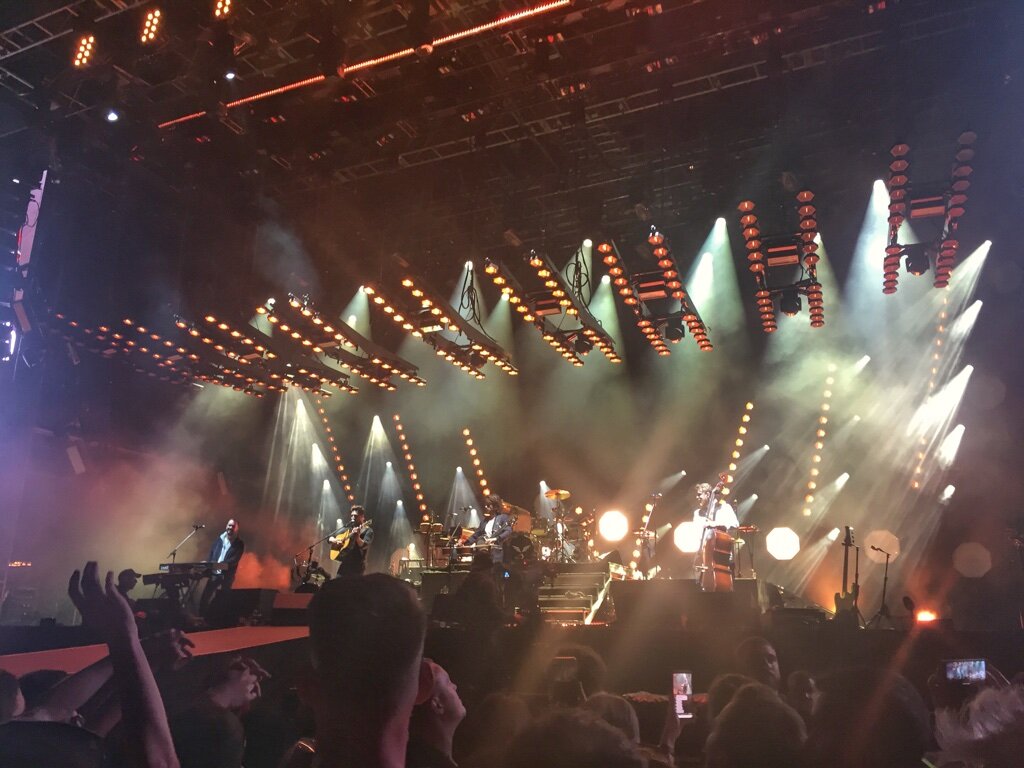
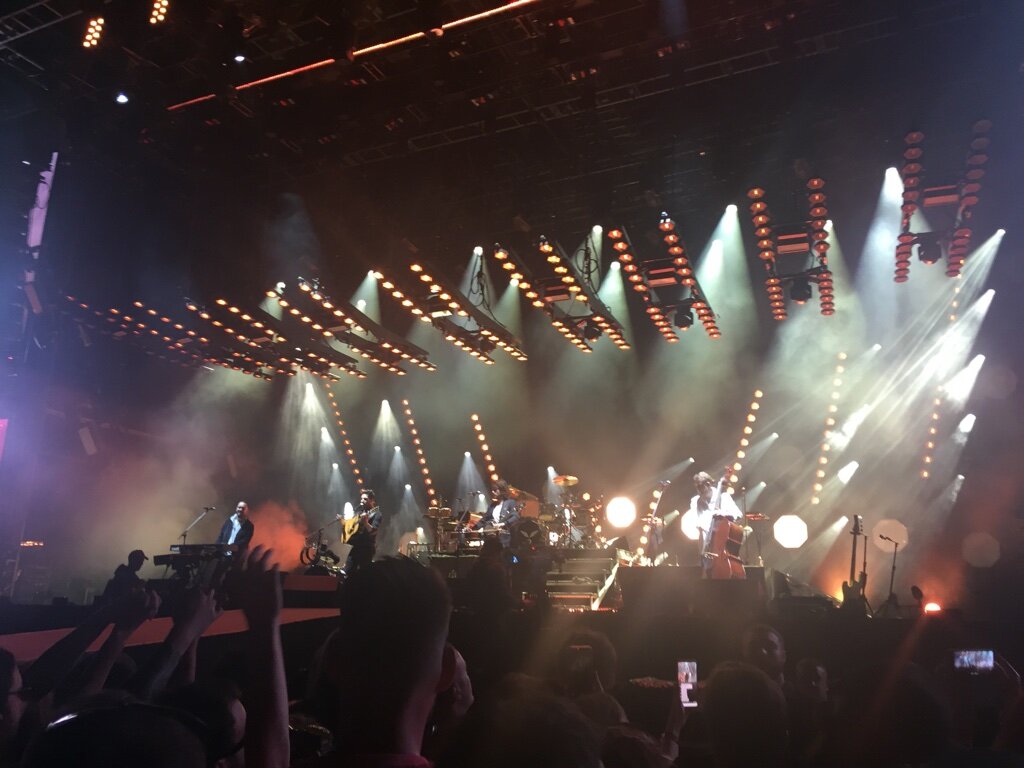
Mumford and Sons on a stage.
Mumford & Sons sing “Awake My Soul”

With all that said, Mumford & Sons put on an amazing performance and had the audience screaming, dancing, and clapping throughout the rest of the night. They were clearly overflowing with gratitude to be playing in their hometown to such an enthusiastic crowd. The lads brought down the house with their classic tunes like “Little Lion Man”, “The Cave” and “I Will Wait”; and brought in some of their B-sides with a mashup of “White Blank Page” and “Forever” which had the bonus of the talented Gretta Ray. The Staves joined the performance to play their newest single “Beloved”, a song about Marcus Mumford’s grandmother who had recently passed, which was heartbreakingly beautiful.

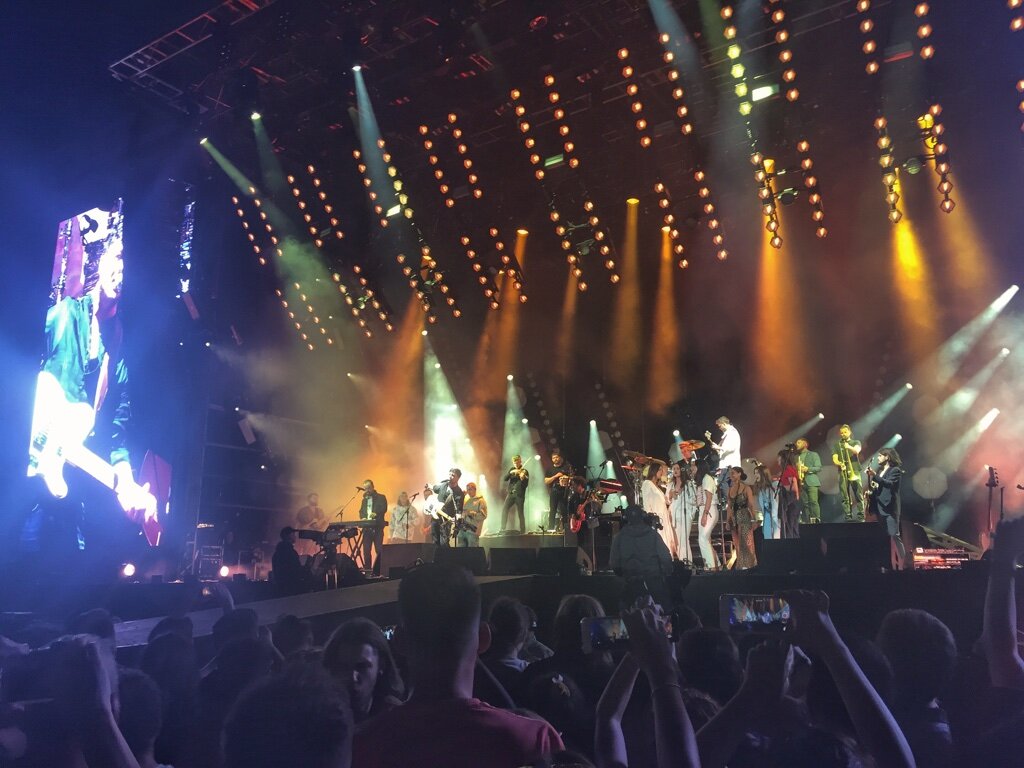
Mumford & Sons brought a full range of emotions to the audience and wrapped it all up with a Beatles cover. This band is all about community and supporting their fellow musicians, and they were joined by several artists who had performed earlier that day: The Vaccines, Dermot Kennedy, The Staves, Kevin Garrett, Jade Bird and Gretta Ray to name a few. This mash of talented artists played “With a Little Help from My Friends” with Marcus doing the signature Joe Cocker scream halfway through, which just the memory of continues to give me goose bumps.

Mumford & Sons and other musicians playing on a stage.
Mumford and Sons sing “With a Little Help From My Friends” with some help from their friends.

The show was out of this world, and I left with confetti in my hair and a huge grin on my face. Although getting home was another adventure unto itself and I didn’t fall asleep until 4am, it was totally worth it. And honestly, it’s thanks to the music community that Mumford brought together that I even made it home! I was trying to get to Victoria station to catch the last train to Brighton and found myself stranded outside the tube station that had just shut down owing to the large crowd of people all with the same goal of getting home.

I ended up asking three lovely strangers, who were leaving the festival, if I could share their Uber, to which they said yes! We spent the ride chatting about the show and I am still blown away by how kind they were to this random American who approached them. It’s thanks to the communities created by Mumford & Sons, GOTR and APE that I went to a festival alone, met fantastic people and was then helped in my hour of need. To me this was more than just good music on a nice day, it was a life changing experience that I’ll never forget.

Virgile Demo info:

Instagram: virgile.demo

Facebook: Virgile Demo

The Great Escape: Alexandra Stréliski

This article was originally published in The Verse, University of Brighton’s student newspaper

One of the rare women in the neoclassical world, Alexandra Stréliski, takes her listeners on an emotional journey with her captivating piano pieces. It’s incredible what one person can do with two hands and set of keys, and Alexandra’s vulnerable piano creations evoke more emotion than a full orchestra ever could. With the release of her new album, Inscape, the pianist is embarking on a massive world tour that extends all the way into 2021. Alexandra admits that she tries not to look ahead, “I just get anxious. I just go one thing at a time because if I look at everything, I go crazy. Because then I’m like ‘oh god I’m booked until February 2021’. You don’t want to look too much ahead.”

Alexandra will be performing at The Great Escape this week and this intimate show will feature a solo performance by her, but she will not be alone on the road. “I have a team supporting me and so I’m doing this with a group of people. If I was just alone, I would go nuts. I mean, in the end, I’m still alone on stage and that’s something that I have to face, but it does help.” Her performances are not the only act of vulnerability, as her previous album follows a very intense part of her life where everything was shifting at once.

Alexandra spoke to The Verse about creating her new album and how she takes care of herself through the ups and downs of every-day life.

A: I wrote [Inscape] after a period that was very transitional [for me], I switched my job, I separated from my partner, I changed a bunch of things. That’s what Inscape is, it’s like this transition in life. [The word] inscape means inner landscapes [as well as] the unique points in each individual. I say that on stage too; it was this sort of trip towards finding that unique point in my life and that was the piano and going on stage and presenting these songs.

V: How has your life changed since releasing Inscape?

A: It changed radically because my album in Quebec had huge success very quickly. I started doing these really big show’s in front of thousands of people and media and then I started travelling with it. Before, I was doing a nine to five job working in the studio [doing] film and advertising, so everything changed. It’s been fast and great!

V: You’ve referred to yourself as a pop musician as well as a classical one. Do you ever feel like you want to find more of a place in either of those genres or are you happy being a hybrid between them?

A: I just gave up on having a place that already exists in life, like just in general [laughs]. I know that I’m sort of like a different type of human, I just feel things very intensely. I really don’t care about having a genre and now I do [have one] because there’s this whole neo-classical modern-classical movement. I’m really not alone, but I don’t care for classifications, I really don’t.

The important thing is to just move people through your art and get through to them. I think once you do that, whatever you’re doing, your job is done as an artist because we translate things. I’m doing what feels most natural to me.

V: Looking ahead for just a moment, are there any places on your tour that you’re excited about going to?

A: Sure! I’m excited to go to Iceland. I’ve never been, and I was excited to come to England and here I am, and I’m going to Germany next fall, so I’m looking forward to that. I’m doing a lot of Quebec shows, so I’m excited for that too. In Quebec, I have a very large audience that’s already built. So that feels great to just show up on stage and have people that are already familiar with the albums and stuff.

When I go on tour in Europe people are discovering me all of the time, so it can get a bit more intimidating, but I’m looking forward to going pretty much anywhere. I mean, it’s so cool that I get to travel with my music, and I just have to bring my hands! [laughs] I just get on a plane and show up somewhere and they have a piano and I play. It’s great!

V: What are you doing when you aren’t playing music?

A: I just watch Netflix [laughs]. Like, I’m kidding but I’m not. It’s so exhausting to do what I do, [to] go on stage and perform and then meeting people and I’m sort of an introvert also, so this takes a lot of energy. So, when I come home, I’m so tired. I just turn my brain off [and] I play video games and watch Netflix, and I cook, I love to cook.

V: What kind of things do you like to cook?

A: I like to cook soul food. Like classics that are just so good. I’m a classical person, classical with a twist, it’s the same as my music. [laughs]

V: When I think of soul food, at least where I’m from, it’s macaroni & cheese and fried chicken. What’s soul food to you?

A: Soul food for me is spaghetti, and my dad is French so like Boeuf Bourguignon and stuff like that.

V: With a good bottle of wine you can’t go wrong with that.

A: Exactly!

V: Do you have any future recording plans?

A: I’m working on a short film right now, and I’m also writing for a circus. These are my next recordings that I’m doing. It’s mostly for the circus and the film, and then I’m going to go into [a] creation phase, maybe during the tour or after, I don’t know.

V: So, you’ve worked in advertising and you write for other things as well. What has been the most difficult thing to write for?

A: I think it was probably in advertising when I had to write some music styles that I [was] just not that good at or comfortable with. One of the hardest things for me is folk music because it’s very guitar-istic and I can strum the guitar, but I can’t really pluck and do something cool with it. Also, when I had to write for some clients that I didn’t feel comfortable supporting politically, so that’s always off. The rest of the time I was pretty lucky, even in advertisement, because I got called [up] for doing piano songs and stuff that was closer to what I do naturally.

V: You started playing the piano when you were about 6. Is that when you started composing?

A: I think I started composing when I was about 10 or 12. I started playing at about 6 when I was in Paris.

V: Do you remember what the first piece was that you composed?

A: [laughs] It was called Atmosphere. It had these really large basses going on and then I played in the high keys and it sounded like a horror movie. I was already kind of Emo; it was way too deep for my age.

V: What you are listening to these days?

A: I don’t listen to that much music because I tend to get over saturated with sound, but of the people in my genre I really love Joep Beving. He’s from the Netherlands. I listen to old soundtracks [as well], and I listen to folk music not like “folk-folk-folk-folk” but like slow folk, like melancholic folk, mostly guitar orientated. I love Jose Gonsalez! That’s the type of music I listen to.

V: Who or what inspires you?

A: Everything. Music is my way of expressing emotions, so anything, like I’m going through another split up right now, and it sucks, so, for sure I’m going to probably express myself through [music]. Just whatever I go through emotionally it’s going to end up being part of the music. Like I said, [music is] really what got me through life and [kept me] sane. I need it, if I don’t play the piano for a couple of days or a couple of weeks, I feel bad inside, I feel like I need to get something out. It’s really the way that I take it out, you know a lot of people work out and stuff. For me, it’s the piano.

V: So, it’s like your own version of therapy in a way.

A: Yep, and I’m bringing it on stage and having the therapy with other people.

V: Well, they’ve paid for their tickets, so they’re consenting so it’s fine [laughs].

A: Yep, they’re consenting [laughs]. Plus, we have a lot of similar emotions within us and I think that’s the whole purpose of art.

V: How long does it usually take you to write a piece?

A: That really depends, I have some pieces that took me two days and I have some that took me three years. Because the melody comes back and then I play it this way and then it’s like ‘Nah, it’s not finished’, and then I can leave it be for a year and come back to it. It really depends, but like Burnout Fugue, for instance, on Inscape, that was very intense in the composition. I think it was like a week where I was just drilling this riff and it ended up being what it is now, so that was quite fast. But when I write for films, sometimes it takes me two hours and it’s done.

V: If you write something really quickly, do you ever question if it’s good enough because it took you a short period of time?

A: No, I think sometimes the first draft is the best because it’s pure and very spontaneous, but if it’s not finished it’s not finished. I have a tendency to know when it’s not complete and I have to work some more on it. Sometimes you don’t need to, sometimes the first draft is the best. I mean it’s never really finished, but I have a sense of knowing when it’s done and it’s good enough for me to want to present it.

You can catch Alexandra’s performance at St. Mary’s Church on Thursday, May 10th at 7:45 pm.

Alex Berdugo’s Passion Project, ABOMM, Brings Students the Live Music They Deserve

In late February of this year, I had the opportunity to attend my first ABOMM show at The Prince Albert. The headliner was Sonny, an up-and-coming Newcastle native whose beautiful voice and catchy lyrics make him a very real threat to the likes of Ed Sheeran. It was here that I met Alex Berdugo, owner and owner of Alexander Berdugo Original Music Management (ABOMM). Alex and my shared passion for music created an instant bond and I left the show feeling excited for future ABOMM shows and opportunities to work together.

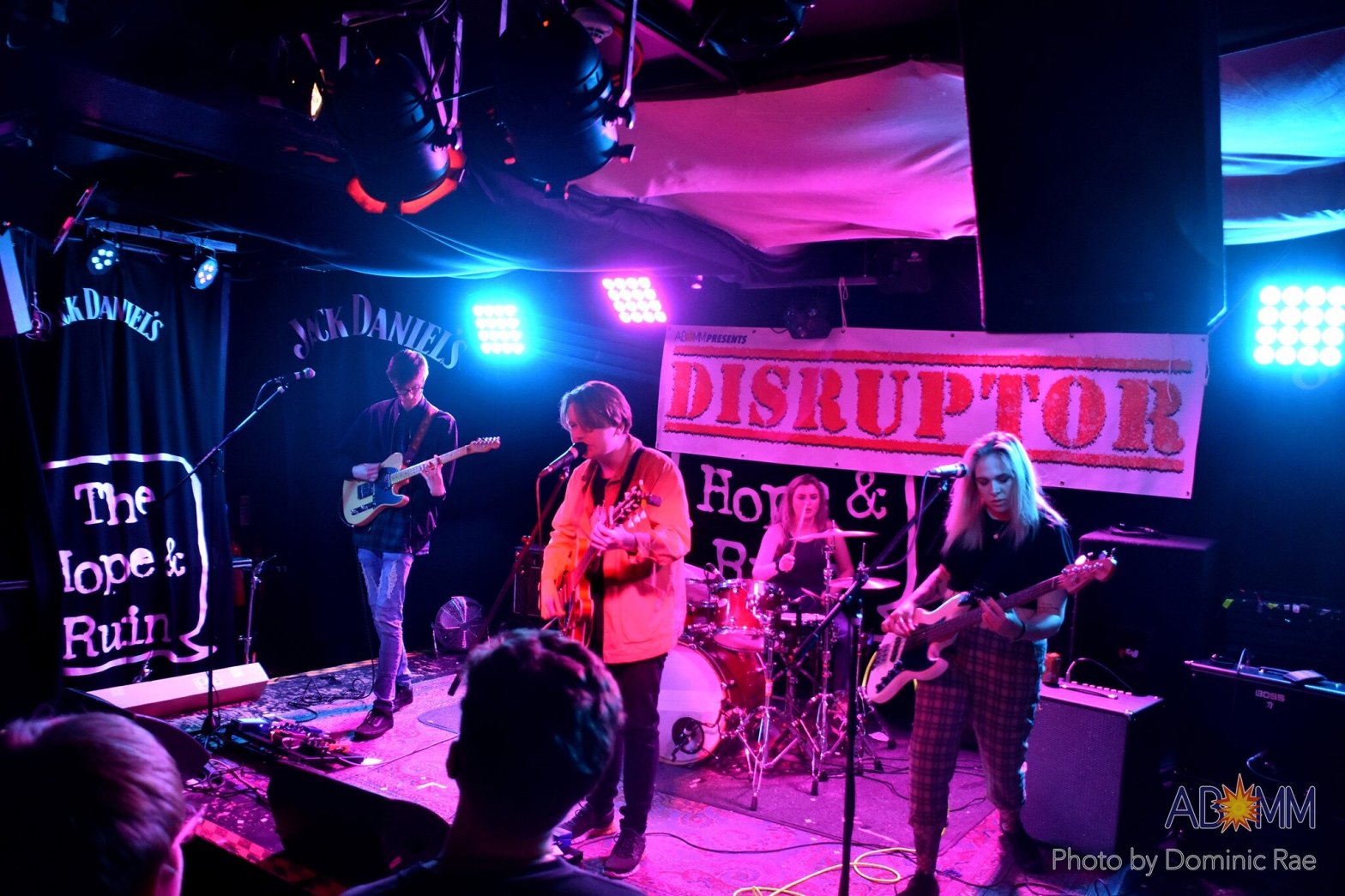
Fast forward several months, and I found myself walking into The Hope and Ruin to cover ABOMM’s first Disruptor Nights gig, an event made up of student bands that were channelling the likes of The Clash, IDLES, and The Arctic Monkeys. The differences between the two shows were astounding and I found myself itching to know more about ABOMM and the man behind it.

I was lucky enough to have a chat with him surrounded by the sounds of a busy coffee shop rather than a cheering crowd and found Alex more than willing to dive into his passion project, ABOMM, and why he does what he does.

The Verse: How did that idea come about to create ABOMM?

AB: I’m from a tiny town in Surrey where there’s a very little music scene, if you’re in a band or an aspiring artist this town is not where you want to be. I was always in bands all through secondary school, and the one thing I wanted to do was to start gigging, but you can’t really do that if there’s not much of a music scene. So the answer was, if you want to have a gig you have to do it yourself, and so I was always collaborating with friends to hire a pub, and did all the learning that you had to do when you’re putting on a gig for the first time.

It was such a great experience because you’d have everyone come along that you knew, it was this great kind of community feeling, and we’d get other friends that were also in bands to play as well so it was like a special occasion. I came to university in Brighton, which has such an incredible music scene, it’s basically the dream if you’re in a band. There is one downside, which is you don’t know who to talk to get a gig and if you do know they’re probably going to try and screw you over in some way, they just want your money.

You might even have to pay to play a gig, which I’ve done before. It doesn’t make any sense, but what they’ll do is promoters will offer you a venue and they’ll say ‘oh yah you should play and it will be great’ and they flatter you and butter you up a bit and before you know it they’re asking for money. And you can earn it back, but there’s a chance you’ll lose money and you’re under lots of pressure and there’s lots of these promotors about.

My band at the time, we were actually lucky enough to be made the house band at the University of Brighton, so, whenever we played a gig it was organized by us, and we were basically organizing gigs every three weeks. It was very intense juggling that with Uni work as well, but this eventually became something that I really enjoyed, I found that I was in my element and we were giving opportunities to other students that they didn’t necessarily have. They didn’t know who to go to before, but now they always had a contact, and they could talk to us and we’d put on a gig, and, eventually, I knew I wanted to take this a step further.

I want to keep giving people opportunities, I want to get people fantastic gigs at great venues, and they can earn fair money as well. And that’s essentially how it started, so it’s actually a very young company. I just graduated myself and ever since it’s been so much fun, we’ve been organizing gigs at amazing venues, like The Hope and Ruin and The Prince Albert. And the bands that we’ve had to play have been awesome, and people wouldn’t necessarily have seen them unless they’d had gigs [at other places] and it’s been a pleasure to be a part of it.

V: Can you tell me more about your own musical background? It’s clear that you have a very open mind when it comes to listening to music. What allowed that to happen for you?

AB: I think I’ve got the most eclectic music background of all time, because the first band I was in was a screamo band, and we had the best time. I was still in school at the time, and it was all about bands like Avenge Sevenfold and Rage Against the Machine, like proper heavy metal. I then moved onto indie rock around the same time, so there was a big variation there, and then later on I joined a jazz band and we were covering popular songs but doing jazz arrangements. And then I started my own band with my own songs, playing indie rock tunes very much Oasis inspired. So, I’ve really done everything under the sun because I played with acoustic acts as well.

I love everything from jazz to metal and I think that helps as a promoter. You don’t want to play just one genre of music, you don’t discriminate. And there’s so much music that you miss unless you look at the local scene, because everything starts there, and so much goes under the radar. So, to give that the chance to share space and stand in front of a crowd that’s never heard you before, and let them hear something new, that’s the best thing in the world. That’s where all the big bands come from you know?

V: And that must feel really good as well to give that to people who are just starting out.

AB: I’ve had some amazing feedback! I’ve heard bands telling me that they’re over the moon that their second gig was at The Hope and Ruin for instance. Bands that are so happy to get paid and not have to pay to play. It’s been so wonderful! People have let me know about other bands that they enjoy and that they think deserve a gig as well, and the love passes on essentially. I can’t wait to see what the next academic year holds.

V: Do you have future plans for ABOMM?

AB: We do have quite a few plans. Once we’ve established [ABOMM in] the Brighton scene a bit more we definitely want to start moving to London and start a network there which will go hand in hand with the Brighton network. We hope that then Brighton bands won’t just be playing the same circuit, they might get a chance to play in London as well.

V: What are you doing now that you’ve left Uni?

AB: Currently I’m working full time up in London, so I do the commute every day, 7am and get back at 7pm, but the commute gives me time to work on ABOMM. I’m always talking to people whenever I’m not napping [laughs]. It’s a busy life, but it’s very fulfilling and I’m super passionate about it. [ABOMM is] a passion project that I want to turn into my full-time role and give jobs to other people as well who are freelancer sound engineers or photographers or people who just want to be on the door. Especially with students, they’re always looking for jobs and we always want to be able to provide them with that. Where ever there’s an ABOMM gig there’s going to be opportunities for them to earn some money.

V: Is it just you that’s doing everything with ABOMM?

AB: Currently it’s just me. I do all of the organizations of the gigs, but I’ve got people I know and trust who can be a doorman for example. And I’ve got a really talented guy who is my photographer, and someone who will be doing the live music recording as well, if a band wants to do that. So, I’ve got like a small kind of informal team. They’re all freelance people and they’re always up for the gig and I definitely want to expand the team and get some more people and grow the network, and make ABOMM something known within Brighton, as a place to go if you’re a freelance person or a band.

V: Are you in a band at the moment?

AB: I’m a few different bands right now, bit of a band slut actually [laughs]. I’m in a band with some old mates that are all students, and it’s great to see the culture of everyone and the starting of new bands working together. It’s great to be a promotor amongst that scene because I’ve been in band practices and my friends will say ‘oh we got this other band going, but we don’t know how to get a gig’ and then I can be like ‘well you know what, I’ve got another gig coming up soon do you want to play?’ It’s fantastic to give them that opportunity!

V: And from that perspective you get to know the bands even better because it’s not just someone sending you music and you’re like ‘oh this is a great song’, you get to know what they’re like live. I would assume it’s not like ‘oh they’re my friends so I’m going give them a gig’. They’re good! The ABOMM shows that I’ve been to, the bands obviously know what they’re doing, it’s not just dudes hanging out in a garage playing music, of course there’s nothing wrong with that. But for the people who are paying to go to these shows they want to go see something good and you’re giving that to people.

AB: It’s one of the main aims of it. I’ve been lucky enough to meet so many amazing people from organizing gigs that I’d never met before, but I’ve checked out their page or I’ve got a recommendation from a friend that they’re good, so I start listening. And one thing leads to another and before you know it you can see there’s this enormous network of student bands that are all playing together and getting gigs. I’m totally open to people sending me their music as well, it’s happened a couple of times before on the ABOMM Facebook page.

And then it’s just so great to let them know that we’re going to be listening to them, we’re not another faceless corporation at all. You’ll know exactly who we are, you can meet us at any time if you’re living in Brighton. Your mate probably knows me and I’m not that faceless guy, I want to be amongst the scene. I’m someone you can trust and the last thing I want to do is exploit you and I want to give you opportunities and everyone who’s played with ABOMM so far has been paid.

V: The first ABOMM gig I went to was the Sonny show, how did that connection come about?

AB: Sonny was actually an artist who I’d been listening to for a couple of years, so it was really a fantastic dream come true to get him to play one of my gigs. The reason I got Sonny was because he’s not from Brighton, but he’s established himself and he’s got some hype around him. I wanted to make a statement with the first gig, and one of the best things was to give student bands from University of Brighton and Sussex the chance to support someone like Sonny, who’s an amazing talented songwriting and is really blowing up.

V: I listened to Sonny a little bit when I agreed to cover the show, and then interviewed him and he’s a delight! While I was watching the show, I felt like I was watching the new Ed Sheeran, but a little bit better. Because Ed Sheeran is ok, but I’m kind of over him and now I’m like ‘Sonny! Yes!’ I’m excited for what he’s going to be doing next.

AB: And he’s so young as well, I think he’s in the same age bracket as every other student who plays ABOMM shows. It was really great to have him along, and I think he inspired other people as well.

V: The gig that I went to earlier this month was for Disruptor Nights; can you tell me more about that and how it differs from a ‘regular’ ABOMM gig?

AB: At ABOMM we want to do different brands of nights essentially, so there’s going to be Disruptor Nights and it is very early days, so we haven’t found names for the other nights yet. [Disruptor Nights] are going to be very regular throughout the academic year and there will be other ABOMM events as well showcasing different genres of music. The Disruptor Nights will basically take the best of the student bands and it will be at fantastic venues, such as The Hope and Ruin, which something I really like about The Hope and Ruin is that even though it’s an intimate venue it really feels like you’re at a concert.

We had Pickpockets playing at our last show and the sound was immaculate and it was a great atmosphere, the lighting was great. And as a student, to go to a gig that’s not necessarily in the Brighton center and it’s not an arena or anything you’re still getting a high-quality experience. Something that ABOMM always wants to do is give people the chance to play at great venues and you know you’re going to be playing alongside top-quality local student bands as well.

V: And Disruptor Nights is going to be hard-rock/punk music?

AB: Exactly

V: Punk isn’t usually my go-to genre, but during that show, especially when Jenny and The Husbands were playing, I remember thinking ‘yes, this is what I need right now,’ because I had had such a stressful past three weeks; it was so good! Every band that was on that line up was unique in their own way, but still pulled the same amount of like excitement and talent that the next one did.

AB: Something that pleasantly surprised me about the student community in Brighton especially, was the love for heavy rock music as well as indie rock, and even metal. And I think it’s something that’s very therapeutic, and it will be mid-exam season and if there’s a Disruptor Night on you know you can go blow off some steam [laughs].

V: That’s perfect! I mean there was a mosh pit in the middle of the audience, so what more could you want? [laughs].

AB: I saw someone drop a whole pint in the mosh pit. I felt terrible for them, but I think they got another one, so they were ok afterwards [laughs].

V: If someone was just starting a promotion company and they asked you for advice what would you tell them?

AB: I would say, believe in yourself, it’s a lot of work but if you’re passionate about it you’ll always find time to do it. It’s going to be late nights, and if you’re working full time like me, it’s going to also be early mornings, but you can do it and no matter how much of a burden it might be in terms of stress it’s all worth it. The feeling after an ABOMM gig makes it all worth it, when you see the impact you’re having on the bands and the impact they’re having on you, that’s what makes it worthwhile. I’d say, get to know the right people, that is one of the most key ingredients.

And don’t be disheartened if you’re struggling to find bands or book venues in the beginning; you start to learn how to play the game a bit more and you start to learn how people work. You find the right venue that suits you, you build up relationships with the venues, and after that things get easier, but there’s always going to be an initial teething period. You learn how to talk to the band about your promotions company after they’ve played a set. I’ve done that a couple of times with ABOMM, and in the beginning it’s very nerve wracking, but after a while you go up to them full of confidence and they can see that, and they’ll trust you.

People can do it, it’s not for everybody, but if your heart’s in it you can do it. It’s daunting, but it always pays off and you get the bug for it and you want to do it again and again.

V: Following that same vein, if you were to meet your 10-year-old self what would you say to them?

AB: Well when I was 10-years-old I think I wanted to be a ninja not run a promotions company [laughs]. I’d tell him you can move to Japan and live in the mountains and be a ninja. And I think 10-year-old Alex would be surprised because I didn’t really have any interest in music until I was 14. I think it’s nice to get a glimpse of the future sometimes and see it’s all possible, even if you’re 10-years-old you can set yourself on the right track. Because you don’t suddenly get to where I am now, you have to find a path and stick to it. So, it doesn’t happen immediately, but if you start early, you’ll end up there.

V: You didn’t pick up a guitar until you were 14?

AB: Yah, I was always intrigued by music, but I was never crazy about it, and then I started, like I think every teenager does, getting into edgier bands and it completely changed my life. I was suddenly playing the guitar, and it had 4 strings on it and was completely out of tune and sounded like heaven to my ears, and everything kicked off from there. All I wanted was to be a Rockstar, and it turned out the way to be a Rockstar was to put on your own gigs and that’s how it started essentially.

V: Did your family play/listen to a lot of music growing up?

AB: My earliest memories of music are probably hearing The Beatles in the kitchen while my dad was cooking, and thinking ‘oh wow, I don’t really understand music and how it works, and I don’t know who these people are, but I know this song sounds incredible.’ And to this day I’m still listening to The Beatles, it hasn’t gotten old. My mum played piano, my sisters used to play more classical instruments, and I picked up a guitar and wanted to be a Rockstar. I think it definitely helped having instruments in the house, otherwise, I don’t know where I’d be now, but I like to think that I’d still end up right back here.

V: Do you remember what the first gig was that you ever went to?

AB: Oh god, it’s so embarrassing. I went to see Glee live [laughs].

V: That was on my bucket list for years! How was it?

AB: I mean, maybe I had the best time ever, but I cannot confirm or deny it [laughs]. I was mind blown because it was at O2 and it’s such a huge venue, and as soon as I sat down someone spilled ice-cold water down my back from the seat behind me. But I had a good time in the end.

V: Were you a fan of the show?

AB: I was definitely a fan of the show. I was watching people who were in school as well, who were wanting to be successful musicians and, as much as it might be a cliché, I do think that that did inspire me to want to be a singer and play the guitar.

V: Are there any bands currently that are in Brighton that you’re really into at the moment?

AB: Oh wow, definitely. Every band that’s played an ABOMM show. I feel like they’re very early in their careers so their either like first year students or they’ve just started, and they haven’t got an album out yet, because that’s obviously a huge barrier for young artists. So, everyone who’s played it’s been a pleasure to see them play live, such as Pickpockets and Hyla Brook.

V: Hyla Brook was amazing! And so fun. That was one thing I loved about them, they had amazing stage presence.

AB: Stage charisma is a huge part of it, so when you’re seeing a tiny show and you’re face to face you can make eye contact. That’s one of the most magical things. There are loads of local bands that I’m hoping to get in the future, so we’ll see what happens with that.

V: What is the best way for people to get a hold of you?

AB: Best thing to do is to message the ABOMM Promotions Facebook page. I’m still knocking about Brighton, you might run into me or come along to an ABOMM show, I’ll always be there. You can always bump into me and say hi, I love speaking to new people and hearing new music. I will listen to everybody that sends me a message on Facebook.

There is also an ABOMM Band Facebook group, so if you go on our Facebook page there will be a link to the group, and you can join that and there will be loads of opportunities that you can be a part of. It’s a closed group with lots of different bands, and they can all talk to each other and I let everyone know when there’s going to be another gig which they can sign up for. It’s an independent system, where we find the bands and the bands join us as well, so there’s a strong ABOMM community going on.

[End of Interview]

For students who want to attend the gig but may not have the funds for it, you can join the Facebook group, ABOMM Opportunities. It’s here you can apply to be a ticket agent and bring people to ABOMM gigs or sell tickets and get paid for it! Ticket agents will also get a chance for free entry themselves and make money just by bringing their friends. ABOMM wants everyone to be able to attend their shows and they understand how financially demanding student life can be, so head to ABOMM Opportunities to jump on this amazing offer!

As a student myself, it feels very reassuring that a company like ABOMM exists and is catering towards the student population. Every band that we love today had to start at the beginning, and for many that was in pubs and bars in their hometowns, and to see that community growing in Brighton is really exciting. ABOMM is truly all about the music, no matter what genre, so I highly recommend that people get involved in this community in any way that they can. Maybe the next band that will be on the bill could blow up across the world, and you could say you saw them when they were just starting out.

Read this article on The Verse

Women in Bluegrass – An Interview with Kathy Kallick

I was brought up in a family where bluegrass was one of the genres that was played most. My grandpa on my mom’s side had been a square dance caller and an accomplished bluegrass musician. These influences poured over into my mom’s life which then jumped to mine. I have the privilege of having access to my mom’s group of friends that consists of world renowned bluegrass musicians such as Tim O’Brien and Kathy Kallick. Last month Kathy was gracious enough to chat with me about her 30+ years of musical experience, her new album and upcoming west coast tour.

Kathy Kallick has been in the bluegrass scene since the early 70’s. Growing up in Chicago she was exposed to the folk boom during the 60’s and listened to musicians like John Prine. Kathy learned to play music on the piano and began writing songs around 9 or 10. “I decided I wanted to try to write a minuet, so I made up my own and played it for my piano teacher who didn’t like it all and said ‘That’s not why you’re here’. She just wanted me to read music and not mess around [with songwriting].” When Kathy picked up a guitar she began to write songs right away. “The first song I wrote for The Good Ol’ Persons, Just Tonight Pretend You’re Mine, was more like a country song, but that early version of [The Good Ol’ Persons] played all styles of music.” It took Kathy a while to write a bluegrass style song; “it took me about seven years of playing in the band to be able to write a song that sounded like Bluegrass, and I did by following Bill Monroe’s model, by telling my story of a girl growing up in Chicago.” That early bluegrass song is called Broken Tie. It’s very simple but pure Bluegrass.

The bluegrass genre was, and still is to some extent, a boys’ club. I asked Kathy about how being a woman in a male dominated music scene has affected her music and her artistic growth. “My parents got caught up in the folk music world, and the University of Chicago had a folk festival every year that my parents took me and my brother to, so I heard a lot of different styles of folk music. There were not as many women as men there, but there were different samples of [female artists]” she replied. “I then moved to San Francisco to go to college, and I couldn’t find the lively folk scene there. I found a bluegrass bar in the Marina that had bluegrass music every night and I loved the music that was being played.” Although there were women on stage, they were part of groups that were still dominated by men. “That’s how I got into the music and came to understand that [bluegrass] was pretty closed off to women elsewhere.”

The Good Ol’ Persons, an all female bluegrass group that Kathy formed, were among the first female groups to “infiltrate the [bluegrass] scene and claim territory.” Kathy went on to say that a large majority of women in bluegrass had been on the sidelines as members of family bands, i.e. The Lewis Family, The Marshall Family. “[Being on the side] was the way women could preform [that was] acceptable.” The original lineup for The Good Ol’ Persons was all female and seen as a novelty. I asked about how that came about; “Our idea was, wouldn’t it be funny if the five of us went into Paul’s Saloon on jam night and played three songs that just knocked everybody’s socks off. Let’s just really nail three songs!” Kathy went on to say that that strategy worked in their favor. “We went in and then the owner of the bar wanted us to start playing that weekend, but we only had three songs so we said we needed a month to learn more.”

The Good Ol’ Persons performed from 1975 to the early 90’s, with different lineups as the years passed. Between 1992 and 1993 the band started branching off and doing solo projects. They had a huge concert in 1995 to celebrate the 20th anniversary of the Good Ol’ Persons. Everyone who had ever been in the band came and played. Since then the band has only played a few times over the years as reunion shows.

Kathy has been touring off and on since the 70’s. I asked her what had been the biggest difference that she’s noticed over the years. “So many more women present…one of the exciting changes I’ve been seeing is women doing sound production. It’s always been called the ‘Sound Man’, and now it’s often a woman running the sound. For so long it’s been seen as a man’s job because the equipment is heavy and it’s very technical.”

The closed bluegrass scene that Kathy described was also “not very respectful towards young people. What was respected was men who were in their 40’s or 50’s who had been at this for a while, and those were the headliners. That has really switched, so that now often the most headliners are not just women but young women. Women in their 20’s kind of rule right now, it’s awesome.” Kathy went on to say, “These young people have started when they were little kids and were given the opportunity to devote as much time as they wanted, often really fostered by parents who encouraged them to play music from an early age.”

This topic brought us to Molly Tuttle, a 20-something bluegrass player, who, last year won the International Bluegrass Music Association’s award for Guitar Player of the Year. She was the first woman to ever win! “At the age of seven [Molly Tuttle] was already an accomplished musician. As a teenager she began writing songs and carving out something that was very individual. She was also homeschooled, so she had all this time to devote to this in a way that I think is pretty unusual and a sign of our times right now. I think parents recognize that this is a valuable thing if their child has an interest in it.”

Some young musicians also owe thanks to Kathy’s teaching skills. She teaches several courses on songwriting in California and Colorado. Age ranges vary; “There could be a 15-year-old and an 80-year-old in the same class, and they all come with open ears and enthusiasm.” The genre that Kathy teaches depends on the class. Sometimes it’s bluegrass and other times the genre is open to interpretation. “It’s always acoustic instrumentation – no one comes with their electric piano.”

Kathy recounted a story about a songwriting class she taught in West Virginia that was full of southern rural white men. “I had never taught in that situation. The first couple of hours felt awkward for everybody. These guys didn’t know who I was, hadn’t heard my songwriting, weren’t really sure I had anything to offer them. It turned out to be a wonderful week.”

Kathy explained that she likes her songs to dig deep into personal stories and feelings; it is not all about craft. She needs it to go beyond that. “Towards the end of that week I had to go seek out a roll of toilet paper to pass around to mop up these guys’ faces because they were all crying. They had written songs about their mothers and their family farms. All of them had stories about family members who had been in the Civil War. This was unprecedented for me! One guy wrote a song about his dog who had died and the whole room lost it. These guys were the real deal!”

Inspiration runs swiftly through Kathy’s songwriting classes, but I was curious where else she finds inspiration and what her experiences of collaborating were like. Kathy replied, “I love my current band, they are incredibly inspiring to me. They inspire me to write songs that this band can play, which has always been the case.” Previous bands in Kathy’s history inspired different types of songs for her. It all depends on the people she’s playing with. “This current band is probably my favorite. Everybody has a wide variety of styles they listen to and can play so it’s wide open.”

Kathy’s solo records have given her the chance to do short collaborations with people she normally would not work with, which gives her a lot of joy. Her last solo record, Cut to the Chase, “is all story songs. I thought of that album as a book of short stories…so I had different people playing on different tracks.” One of the people Kathy collaborated with on this record is one of her musical heroes, Clive Gregson, an English musician with an incredible talent for songwriting. At the time Kathy was trying to figure out who could co-write the songs for Cut to the Chase with her. “Clive Gregson was living in the U.S. I said to my husband, ‘What I really wish is that I could get someone like Clive Gregson,’ and he said ‘Well why don’t you get Clive Gregson?’” Kathy brushed off this suggestion saying that Clive would never do that, but her husband encouraged her to ask him if he wanted to, “and he did! He thought it sounded fun to play bluegrass.” Clive and Kathy’s collaboration created new melodies and lyrics that “were so different than anything I could ever have come up with, so different that at times I didn’t even think I could sing!”

The Kathy Kallick Band is currently touring the west coast with their new album Foxhounds. Her band does not tour heavily except during the summer festival season, so make sure you check them out! Get ready to hear some rockin’ bluegrass and see powerful women on stage doing their thang.

Pay Your Rent to the Planet: An Interview with Alice DiMicele

Photo by Paul Deatherage

Last week I chatted with Alice DiMicele, a long time Rogue Valley resident and musician. Alice has been playing and creating music for most of her life, and weaves folk, jazz, gospel, and country into one super genre. With the mixture of these genres Alice’s music struggles to find a permanent home. “The Folkies don’t wanna play me because my music has too much jazz in it..the Jazzies don’t play me because my music’s too folky…it’s not country enough for them to consider it Americana, although that’s really what I consider it.” Pinning down her style of music “has been the bane of [her] existence” Alice told me with a sigh.

Alice wrote her first song, a minuet, on piano when she was around 5 years old. “I always had a song in my head and in my heart,” Alice told me, “I wrote the song Celebrate the Rain when I was 11,” which appeared on her first album years later. When she was 17 years old she picked up a guitar and has not put it down since.

In 1988 Alice created her own record label, Alice Otter Music, and released her first album under that label. She was approached by many agents offering record deals, but she turned them down, wanting to stay true to her craft and her sound. “I just didn’t want to go [through someone else], I had people sniffing around…and there was one guy who was super agro. He kept saying ‘oh yah we’ll get you a stylist and they’ll help you choose your hairstyle and your clothes’. I just looked at him and was like are you kidding me? No thank you!” I mentioned how remarkable that choice was, especially for a 20-something-year-old artist who is just starting out, most musicians would have been ecstatic to have record companies asking them to sign with them.

Having an independent record label has helped and hindered Alice’s musical journey. I inquired about the different ways that it has affected her, “Independent minded people are like ‘yah right on I wanna check this out’ and people are excited to support it.” Alice has been held back by her own label in different ways, “for many years you couldn’t get a booking agent without a label, and also when you don’t have a label you have to do all the work. So I’ve had to do all the work myself, which is quite a feat. I’m very grateful for the people who have helped me over the past thirty years.” Although this has been a lot of work for her, Alice is able to see the silver lining, “the blessing is that I get to make all the decisions. No one is taking the money and putting it into something that I don’t believe in. If I have extra money I give it away to people or organizations that need it.”

Alice’s first record, Make a Change, is 30 years old this year. I asked how it felt to have a piece of her work turn that age, “it’s weird,” she replied, “it’s like when you’re kids are 30, it’s really weird. I don’t really know how describe it, but I’m really grateful that I have a body that is learning to corporate with me, and I can do most of the things that I love to do and I’m still making music.” Alice recalled how she remembers playing to hundreds and hundreds of people when she was young, “[the music] was ok, but I was just learning and everyone was flocking [to me], which is funny because now I have to work a lot harder to fill a venue and the music is light years better.”

Alice admitted that she has a hard time appealing to younger audiences, not because they do not like her music, but because she does not know how to reach them, “and people my age don’t want to go out anymore.” She has not lost any her of long term fans, they support in anyway they can by purchasing her records and donating to her many political causes, but they are coming to fewer live shows. I asked her how she was adapting to this, “I’m having to learn some of the technological things to try to reach a new audience, which is humbling and good on so many levels, it’s also really challenging,” she replied. Thankfully her original fans now have their own kids that they bring to her concerts, many of which will come up after the show and ask her for an autograph. “I have young women come up and say ‘my mom or my dad dragged me to this show, I had no idea what I was coming to and I’m so inspired.’ That’s the crux of joy to me.”

During her 30+ years of music Alice has been politically and environmentally active. Many Rogue Valley residents may have seen her at this year’s Women’s March that happened in Medford in late January. Her website lists multiple organizations that she supports and encourages others to do the same. I asked her to dive into her reasons for sharing this passion with her listeners. “For me, we all have to pay our rent. There’s paying rent to your landlord or your mortgage, but then there’s paying rent to be on the planet. To me it’s really important that we fix what’s broken [and] change the course of what’s happening on this planet, and I’m not gonna stop working.” Alice really appreciates indigenous wisdom and works hard so that future generations can enjoy what she and her ancestors had. The music that she creates carries the same message, it’s just a different format.

Continuing with this ancient wisdom theme, I asked about the nature imagery that comes through her music and that often sounds like a prayer. “Ever since I was a little kid my biggest connections have been with nature. I grew up in a suburb of New York City in New Jersey, and somehow I connected to the dandelions growing through the cracks in the sidewalk. For whatever reason, I felt that connection even though I lived in a place that wasn’t really about that. I [believe] that [connection with nature] is a gift, and I don’t want to adopt someone else’s culture, but there is a sense of indigenous wisdom that I think we all have. Everybody on this planet is indigenous to somewhere. I feel like that wisdom is important to tune in to.” Alice mentioned that the Rogue Valley is home to Grandma Aggie, a spiritual elder from the Takelma tribe, who shares her wisdom with the community. Along with the spiritual community of Ashland, Alice has met and bonded with people on the road who have similar beliefs. This wisdom easily weaves itself into her music, creating a sound that is authentically her.

One With the Tide is Alice’s newest and 14th album. I asked about her writing process as I’m always interested in how people write and create songs/albums. “The musical body of work as a whole has taken my whole life, and it’s going to continue into the future and I don’t know how many songs I will or won’t write, but some of the songs on that album, like The Other Side, were written in 1999,” she replied. “Some of the songs come flying out, and others you have to work on. The song One With the Tide was written for my friend Barry when he was about to cross over, or as I like to say ‘graduate from this life.’ He was diagnosed with stage 4 cancer and they gave him 6 weeks to live. He began the Siskiyou Film Festival and he was going to be at one of the festivals and I was on the road. The people who organized it called me up and said, ‘you’re one of Barry’s best friends, we want you to come and sing’, and I was heartbroken because I had a gig that I couldn’t cancel. So I wrote the song and put it on YouTube, I could barely get through it because I was crying the whole the time. They played it at the festival and that was the way I said goodbye to my friend.”

When Alice plays live she chooses songs that will take her listeners on a meandering path through different emotions. One With the Tide is the song that “invokes our loved ones that are no longer with us, and to acknowledge that to be human is to grieve.” This gives the audience a cathartic experience as well as a chance to let go of any emotions they need to before moving on to the next song. Her favorite song from the new record is Seeds, “it took me a bit to write, but it’s a really good message for myself and several friends of mine. It’s probably my favorite because it has a lot of imagery that I can relate to.” The song talks about putting your energy towards what we want in our lives and what we want to create in them.

Alice and her band tour relatively often and she has 14 albums to her name. I was curious if she prefers touring or recording more, “I love recording, but I’m also a Gemini, so I have two lives. I have the recording life and the touring life and if I had to choose one I would just perform. Nothing’s more magical than taking willing people on a journey. I’m not really interested in performing in front of people who are talking, my idea of performing is to an audience that’s listening attentively.” Alice went on to say that her band recently performed in Santa Cruz where part of the audience was sitting in front and everyone in the back was dancing, she loved this. Her goal is to get people to sing and dance and get involved. “If you are gonna take people on a journey it’s kinda like a ritual, so you if you’re taking them down into the depths to get a release you have to bring them back up.” Her favorite performers always did this, they took their listeners on a cathartic journey and left them feeling uplifted and inspired, this is what she endeavors to do during her shows. As a performer, Alice believes her duty is to take people on an emotional journey as well as create community for her listeners. She is really proud of the community her fans have created, and has lost count of the amount of people who tell her they met their partner at one of her shows.

30 years in and Alice is still trying to improve her craft. “I’ve worked really hard to be what a singer is and I’ve studied voice. As I get older there are different challenges that I’m facing. I’m trying to meet those challenges with joy, respect, and appreciation. I feel like my voice is getting better which is surprising, but then I think about my favorite singers who’s voices got better as they aged.”

Alice’s band, Force of Nature, will be heading out on the road in May. There will be several shows in Washington and in California, including the recording of a live album in Sebastopol. Check out her website for more information, tell your friends and get ready for an emotional journey that will leave you with a smile on your face and a song in your heart!

You can find Alice on FacebookTwitterYoutubeInstagramBandcamp, and Spotify

The Way is Read – New Music from The Staves

I discovered The Staves a few years ago when I heard their song Mexico. This is a beautiful yet simple song that shows the power that these ladies’ voices have. The Staves are three sisters from England, Jessica, Camilla and Emily Staveley-Taylor. It’s clear that The Staves have been playing music since they came out of the womb. Their pristine voices and crystal harmonies are captivating.

Originally called The Staveley-Taylors, The Staves began playing open mics at pubs in Watford, England in the early 2000s. They later changed their name to The Staves and performed on the Tom Jones album, Praise and Blame, which was released in July 2010. In 2011 The Staves released two EPs: Live at Cecil Sharp House and Mexico. In 2012 The Staves toured with The Civil Wars and their fan base began to grow. For the next few years they supported and played with artists such as Ben Howard, Nathaniel Rateliff, Bear’s Den, and Bon Iver. They released their debut album, Dead & Born & Grown, in November 2012.

The Staves released their third and newest album, The Way is Read, on November 24th, 2017. This album is a collaboration of The Staves and the NYC-based chamber music ensemble yMusic. The Way is Read opens with Hopeless, an a cappella number that has reminders of their first album. The second track, Take Me home, is mostly yMusic and, frankly, is weird. Honestly I skipped it because it was too intense for me. It’s a beautifully orchestrated song, but it sounds like it belongs on a movie soundtrack rather than a Staves album.

The rest of the album is a mixture of beautiful voices, poetic violins, and crazy intense jams. It will take me a few more listens before I feel less like I’m in a rollercoaster without my seatbelt…hopefully.

I definitely recommend starting with their first album, Dead & Born & Grown, before listening to The Way Is Read. For those who are already fans of The Staves definitely check out their new album. It’s strange and hauntingly beautiful, and I’ll bet that they are really proud of this project and excited to share it. The Way Is Read is now on Spotify, along with all of their other albums, please check them out!